

If you’ve searched for a Bridgoro review, you’re probably trying to answer one simple question. Does this thing actually work the way it claims to?
Bridgoro is a peer-to-peer crypto exchange built around a fairly simple idea. You trade directly with another person, and an escrow system holds both sides of the deal until everyone gets paid. No account verification, no ID upload, no KYC form to fill out.
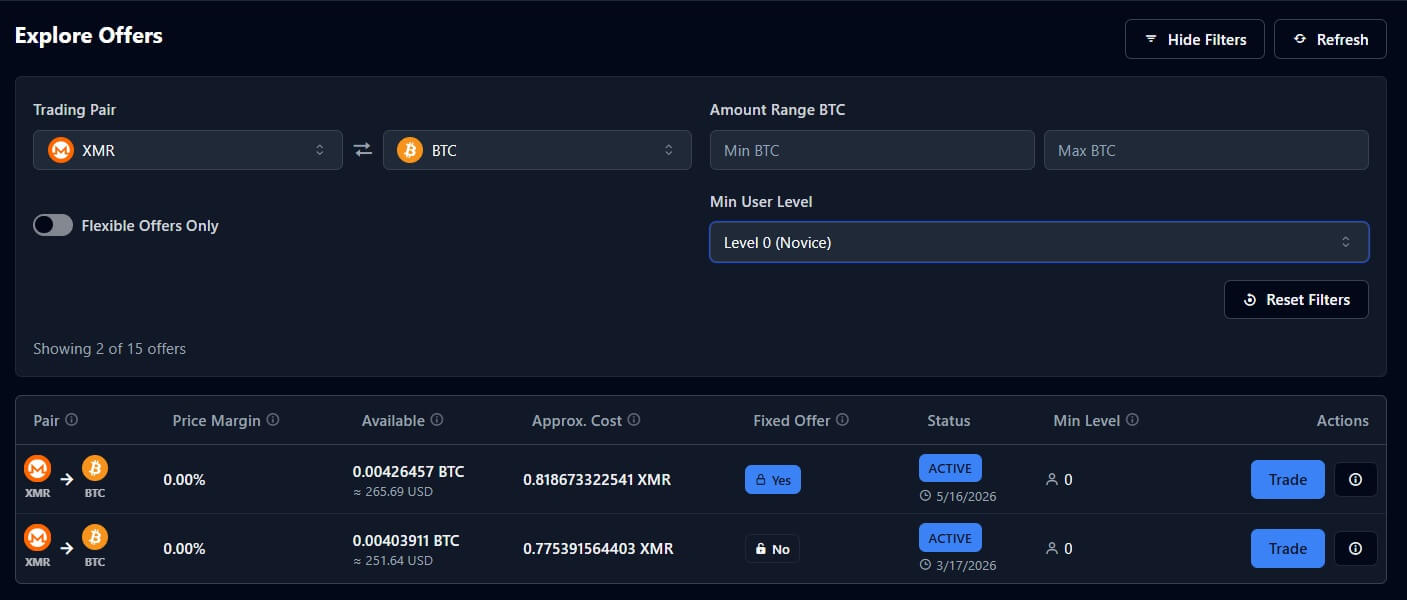
Simple enough on paper. The mechanics underneath get a bit more involved, and that’s really what this Bridgoro review is going to dig into. Instead of repeating what’s already sitting on the homepage, we’ll walk through how a trade actually moves from start to finish, what happens when something goes sideways, and what’s worth checking before you send any funds.
What Is Bridgoro?
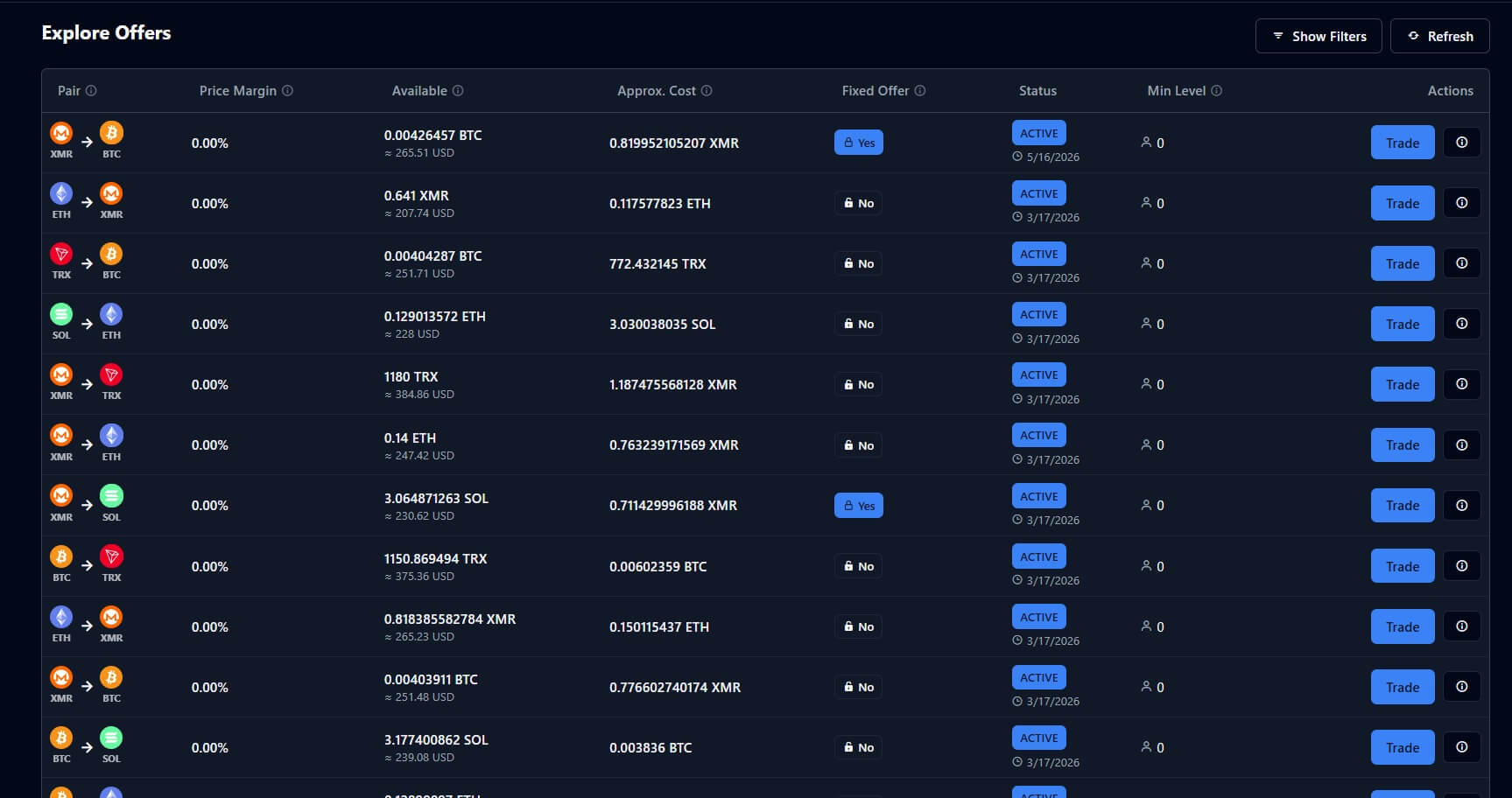
Bridgoro is a semi-decentralized P2P exchange covering five cryptocurrencies: Bitcoin, Ethereum, Monero, Solana, and Tron. Users create “Offers” to sell an asset, other users accept them and become “Buyers,” and the platform locks both sides’ funds in a temporary buffer wallet until everything clears.
A small, independent two-person team built it. That’s not automatically a red flag. Plenty of genuinely useful crypto tools started out exactly this way. Still, it’s worth knowing going in, since the platform doesn’t carry the size or history of a major custodial exchange behind it.
Quick Facts
- Type: Peer-to-peer (P2P) crypto exchange
- Model: Semi-decentralized, escrow-based
- Assets supported: BTC, ETH, XMR, SOL, TRX
- KYC required: No
- Team: Independent, two developers
- Stage: Moved from testnet to mainnet, with a fiat on-ramp and cross-chain bridge still on the roadmap
Bridgoro
How a Trade Actually Works
A trade here isn’t a single click and done. It unfolds over a short sequence of steps, and understanding each one matters if you want to know where your money actually sits at any given moment.
It starts with a Seller creating an Offer. They pick an asset pair, say BTC/ETH, set an amount, and choose a price margin, which can run as either a discount or a premium against the market rate. They’ll also decide whether it’s a Fixed Offer or a Float Offer, something we’ll get into in a second.
Before that Offer goes live, though, the Seller actually has to fund it. Crypto gets sent into a buffer wallet first, and nothing shows up for Buyers until that transfer clears on-chain. Easy detail to miss, but an important one.
Once a Buyer accepts, a “Deal” gets created and the exchange rate locks in. From that point on, neither side has to worry about the price moving mid-trade.
Both parties then send their funds into escrow, and the system sits there watching the blockchain for confirmations. Once both transfers check out, Bridgoro releases the crypto to each side, minus a service fee pulled from the Seller’s portion.
And if something breaks along the way, say a Buyer never sends their funds, or a Deal just times out, the platform doesn’t leave things hanging. It kicks off a rollback process, covered in more detail further down.
Fixed Offers vs Float Offers
People mix these two up more often than you’d think, so it’s worth spelling out clearly.
Fixed means the Buyer takes the whole thing, no partial deals allowed. List 0.5 BTC as Fixed, and nobody can come along and grab just 0.1 BTC of it. All or nothing.
Float loosens that up. The same 0.5 BTC, listed as Float, can get split across several different Buyers until the Offer runs dry.
Want a quick, clean trade with one counterparty? Fixed does the job. Prefer your liquidity to reach more people over time? Float handles that better.
The Escrow System, Explained
A lot of coverage throws the word “escrow” around without ever explaining what’s happening underneath it. Here’s the plain version.
Once a Deal exists, both parties’ funds land in a buffer wallet, which is really just a temporary wallet the system controls for that one specific trade. It’s not a smart contract holding funds on-chain in some fully trustless way. Think of it more like a managed process: the backend tracks blockchain confirmations and releases funds once both sides have delivered.
That’s basically where the “semi” in semi-decentralized comes from. Blockchain adapters handle the actual movement and confirmation checks, sure, but the matching and release logic sits in Bridgoro’s own backend rather than in some audited, publicly verifiable smart contract.
Every Deal moves through a defined set of statuses along the way:
- Created: the Deal exists, but no funds have moved yet
- Accepted: the Seller has agreed to the terms
- Wait For Transfers: the system is waiting on blockchain confirmations
- Completed: both sides have received their funds
- Expired: the time window ran out
- Rejected: the Seller declined
Why does this matter? Because it tells you exactly where your funds should be at any given moment, instead of leaving you staring at a loading icon and hoping for the best.
What Happens When a Trade Fails
Most reviews skip this part entirely, which is strange, because it’s arguably the single most important section if you’re actually deciding whether to trust a platform with your crypto.
Say a Deal expires because a Buyer never sent their side. Bridgoro triggers a rollback, and whatever sat locked in the buffer wallet goes back to its original owner, minus the network fee needed to move it.
Then there’s the partial rollback. Picture this: you’re a Seller, and you accidentally send more than the Offer required. Bridgoro won’t auto-refund that excess right away. It sits in the buffer wallet under something the platform calls a “Dumb Fee,” mainly so an extra network fee doesn’t get burned just to send back a small overage. If the leftover is meaningful, though, a partial rollback returns it separately.
Monero plays by different rules here. Its transactions don’t reveal a traceable sender address, so there’s no automatic way for the system to figure out where a refund should go if something falls apart. That’s why Bridgoro asks for a separate Monero Rollback Wallet Address before the trade even starts. Trading XMR? Don’t skip that field. It’s the only way back to your funds if the Deal doesn’t go through.
One more piece worth mentioning: a Collector Module handles dust, meaning tiny leftover balances in old buffer wallets that aren’t worth withdrawing since the network fee would eat most of it anyway. Rather than letting these sit indefinitely, the system periodically sweeps them for platform use. A reasonable design choice, though also a decent reminder not to leave small amounts parked in a buffer wallet forever.
Bridgoro Fees
Fee Structure
- Service fee: Charged to the Seller, deducted before funds reach the Buyer. The percentage can shift by account level, so check the current rate at signup.
- Network fee: The standard blockchain fee, paid by whoever initiates the transfer.
- “Dumb Fee”: Not really a fee. It’s excess from an overpayment, held rather than auto-refunded so an unnecessary transaction doesn’t need to happen.
- Level-based discounts: Higher user levels can lower the service fee percentage.
A quick example makes this easier to picture. A Seller lists 1 BTC, and the service fee sits at 2%. Once the Deal completes, Bridgoro takes 0.02 BTC as its cut, leaving the Buyer with 0.98 BTC. That fee only kicks in once a trade actually finishes, too. Cancel or roll back a Deal, and nothing gets charged, since nothing actually changed hands.
No fixed public rate table exists for these fees, by the way, since they shift depending on account level. The safest move is checking the rate shown right at the offer-creation screen before committing.
Security Features
Security Checklist
- Two-Factor Authentication, TOTP-based, works with apps like Google Authenticator or Authy
- reCAPTCHA on registration, login, and password recovery
- Email verification with time-limited confirmation links
- JWT-based session management
- Rate-limited password recovery to cut down on abuse
- Recovery codes for 2FA, in case a device gets lost
Nothing groundbreaking in the 2FA setup, but nothing missing either, which counts for something. One small detail stands out: changing your email requires 2FA already turned on, plus re-entering your current password. A bit of friction, sure, but the kind that actually helps against account takeover.
Supported Assets and Pairs
Five chains, and every combination between them is tradable.
Supported Pairs BTC ⇄ ETH, BTC ⇄ XMR, BTC ⇄ SOL, BTC ⇄ TRX ETH ⇄ XMR, ETH ⇄ SOL, ETH ⇄ TRX XMR ⇄ SOL, XMR ⇄ TRX SOL ⇄ TRX
That comes out to 20 directional pairs total, since BTC/ETH and ETH/BTC count separately depending on which side is the Input Asset. New networks can join down the line through the platform’s adapter system, a plug-in style setup built so adding a chain doesn’t mean rebuilding the whole exchange from the ground up.
XP, Levels, and BRGX: The Gamification Layer
Bridgoro layers a rewards system on top of the core exchange. Complete tasks and trades, and you earn XP. Enough XP, and you climb through User Levels.
These levels do more than look nice on a profile page. They shape real things, like transaction limits, service fee discounts, and cashback paid out in BRGX.
Here’s the part worth remembering, though: BRGX isn’t a cryptocurrency at all. It’s just a number tracked in Bridgoro’s own database, nowhere near a blockchain. You can earn it, spend it inside the platform, sometimes convert it, but it doesn’t exist anywhere else the way BTC or ETH does. Loyalty points, basically, not an investable asset.
A referral program ties into this too. Refer someone, get XP once they register. If that person completes a first trade, you get a one-time BRGX bonus, plus a small cut of whatever they trade going forward, also paid in BRGX.
No-KYC: What It Means and What It Doesn’t
“No KYC” sits at the center of Bridgoro’s whole pitch, so it’s worth being honest about what that actually buys you.
On the upside, there’s no ID upload, no address verification, no waiting around for some compliance team to approve an account. For anyone who values privacy, or just doesn’t want a trading history tied to a government ID, that’s a genuinely useful benefit.
But Bridgoro doesn’t operate under a license from a body like the FCA or SEC. Not unusual for a P2P escrow platform specifically. It’s a structurally different setup from a custodial exchange holding customer funds long-term, and licensing regimes built for those don’t really map onto something like this. Even so, it means no regulator exists to appeal to if a dispute ever goes badly. Whatever protection is here comes from the platform’s own rollback and escrow mechanics, full stop, not from outside oversight.
Privacy and speed on one side, a regulatory safety net on the other. That trade-off is really the core decision point for anyone weighing a platform like this.
Where Bridgoro Stands Right Now
Bridgoro didn’t launch mainnet-ready out of the gate. A public testnet phase came first, including closed beta testing hosted on Bitcointalk, before mainnet trading rolled out with its Earnings feature switched on.
Further ahead, the platform’s own roadmap points toward stablecoin pairs (DAI, USDT, USDC across several networks), fiat-to-crypto exchange for cash-to-stablecoin trades, and eventually a cross-chain bridge running on the project’s own liquidity.
None of that is fully built yet. It’s forward-looking territory, plain and simple. Judging Bridgoro today means judging it for what it currently is, a working P2P escrow exchange covering five crypto assets, rather than the fuller cross-chain bridge it hopes to become.
How to Evaluate a Platform Like This Before You Trade
Whatever any Bridgoro review says, including this one, building your own checklist before trusting an escrow-based exchange with real funds still makes sense.
Team transparency comes first. Do you actually know, even loosely, who’s behind the platform?
Custody model is next. Is your money sitting in a smart contract, a managed wallet, or something in between, and could you explain the difference if someone asked?
There’s the dispute and failure process too, worth checking before anything else. If a trade goes wrong, is there an actual written process, or just vague reassurance?
Fee disclosure matters just as much. Shown up front, or do you only find out after committing?
And regulatory positioning rounds it out. Does skipping a license make sense for how the platform actually works, or does it look more like a way to dodge accountability altogether?
On Bridgoro’s side of the ledger: fees get disclosed before a Deal locks in, the rollback process is documented in real detail, and nobody’s hiding that a small team runs the show. Whether that’s enough trust for your own situation is a call only you can make. At least the decision gets made with actual mechanics in front of you, not just a feature list.
FAQ
Is Bridgoro legit?
It runs as a working P2P escrow platform with a documented trade and rollback process, built by a small independent team. No license from a major financial regulator exists, though, so the same caution applied to any early-stage, non-custodial platform fits here too.
Does Bridgoro require KYC?
No. Registration just needs an email address, a password, and email verification. That’s the extent of it.
What are Bridgoro’s fees?
A service fee comes out of the Seller’s side once a trade completes, plus the usual blockchain network fee. Since the service fee percentage can shift by account level, checking it at the offer-creation screen is worth the ten seconds.
What happens if a Bridgoro trade fails?
A rollback kicks in, returning locked funds to whoever sent them, minus the network fee. Monero trades need a separate rollback wallet address set up front, since Monero doesn’t allow automatic sender-based refunds.
Is BRGX a real cryptocurrency?
Not really. It’s an internal reward currency tracked in Bridgoro’s own database, not on any blockchain, with no use or value once you step outside the platform.
Which coins does Bridgoro support?
Bitcoin, Ethereum, Monero, Solana, and Tron, all 20 directional pairs between them tradable, with more chains planned through the adapter architecture down the line.
Bottom Line
This Bridgoro review really comes down to a fairly simple trade-off. A no-KYC, escrow-based way to swap between five major cryptocurrencies, backed by a rollback process that’s genuinely documented for when things go wrong. But also a small team’s infrastructure standing in for what a licensed, audited exchange would normally provide.
If privacy and direct P2P trading matter more than regulatory backing, there’s more care built into Bridgoro’s mechanics than a quick glance suggests. The rollback system, the Monero-specific handling, the upfront fee display, all of it points that way. But if regulatory protection is something you need as a baseline, no amount of solid mechanics changes that this platform simply doesn’t offer it.