

Coinpedia calls itself a crypto encyclopedia. That undersells it a bit, and oversells it a bit too. What you actually get is a news site, a market-data hub, a small learning platform and an events calendar, with a paid-content business sitting right underneath.
This Coinpedia review goes through what each part does, how the site pays its bills, and how deeply it’s rooted in the crypto market. That last bit matters if you’re a project, an agency or a founder thinking about publishing or advertising there. It matters for plain readers too, since it helps to know how much of what you’re reading is editorial and how much was bought.

Short version: crypto-first, with a reach into fintech and macro news. It accepts Bitcoin and Ether as payment but doesn’t require them.
| Coinpedia at a glance | |
|---|---|
| Type | Crypto and fintech news media with market data, Academy, events directory and PR services |
| Main domain | coinpedia.org |
| Sub-domains | markets., app. (Academy, Community, Companies, Professionals) and events. |
| Free tools | Portfolio tracker, live market pages, events directory |
| Paid services | Press releases, sponsored posts, content writing, product and service reviews |
| Payment accepted | BTC, ETH, PayPal, bank transfer, wire transfer |
| Ad prices | Not published; quote on request |
| Checked | 5 October 2026 |
What is Coinpedia?
The homepage menu gives most of it away. There are nine top-level items: Home, News, Information, Markets, Product Reviews, Academy, Community, Find and Contact.
Articles sit on coinpedia.org, but the rest is spread around. Markets and the portfolio tracker are on markets.coinpedia.org. The Academy, community feed and the company and people directories share app.coinpedia.org, and events have an address of their own, events.coinpedia.org.
One thing is easy to miss. In the Information menu, Research Report, Press Release, Guest Post, Sponsored and Crypto Regulation all sit in the same dropdown, so editorial and paid material share a menu.
Who runs it is less clear. The About page calls CoinPedia “an entirely independent platform”, and lists contact emails, but it names no founder, owner or company. Writers do get bylines with a role label, such as Exchange Specialist or Price Prediction Analyst. The sponsored posts shown carry a single byline, “PR Manager”, an account with more than 2,000 posts.
What Coinpedia offers
| Section | What is there |
|---|---|
| News | Daily articles, live blogs with timestamped updates, a short-news feed |
| Price Analysis and Price Prediction | Separate sections; a stock price prediction section also exists |
| Live Market | Coin listings, categories, exchanges, blockchains, compare tool, ETF tracker, launchpad, airdrops |
| Portfolio tracker | Labeled free; tracks crypto, NFT and DeFi holdings by public wallet address or ENS name; price alerts |
| Product Reviews | Centralised exchanges, decentralised exchanges, wallets, tracking tools, earning sites |
| Academy | Learning paths, certificates, profile score; the homepage lists 5 courses |
| Events | Directory with filters for location, date, ticket type, event type and category |
| Community, Companies, Professionals | Community feeds (451 on the homepage), plus company and people directories |
CoinPedia
News and live blogs
Live blogs are where CoinPedia stands out. When the Fed met on 16 September 2026, it ran a page called “FOMC Meeting Today [LIVE] Updates” with 28 updates. A separate page on the Senate CLARITY Act vote had 39.
And it isn’t only coin headlines. The same live format has covered U.S. CPI releases and the SpaceX listing on Nasdaq. On a typical day, the front page might hold a price analysis, a political story, and something like “S&P Global Brings AAA-Style Risk Scores to DeFi’s $10B Lending Market”.
Prediction pages tend to run long. The Pudgy Penguins piece from 5 October 2026 has forecasts for 2026 and for 2027 to 2030, and forecasts stretching to 2030 are guesses by nature.
Markets and the portfolio tracker
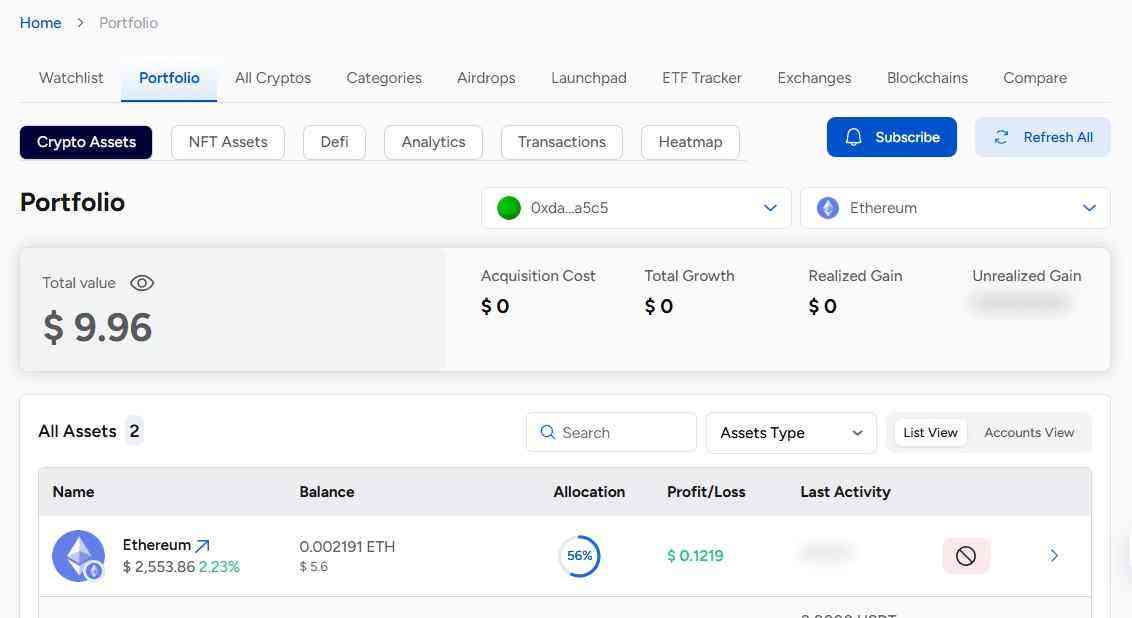
The tracker asks for one thing, a public wallet address or an ENS name. A public address only lets a tool read balances, so no seed phrase is involved at that first step.
According to the portfolio page, the markets side lists 500+ coins and tokens, and the directory covers 200+ blockchains and companies. There’s an ETF tracker and a compare tool in the markets menu too.
Product reviews
This is the thinnest part of the site. The seven newest posts in the exchange section span February 2025 to August 2026, so a handful a year. The latest are SimpleSwap (12 August 2026) and MEXC (20 May 2026).
Only one of those seven shows a star score, a 4.0 for BYDFI, and the page doesn’t say how that score is built.
Academy, community and events
The Academy pairs lessons with a certificate on completion, a profile score and a “Pro badge” task list that promises a profile badge, job listings and a founder interview. The homepage sorts the lessons into three tracks: Beginners, Traders and Blockchain Developers.
Events cast a wider net than crypto. On 5 October 2026, the directory listed Token2049 Singapore, Korea Blockchain Week and the Canadian Bitcoin Conference, right next to the Open Banking and PSD3 Europe Forum and a CFO leadership summit in Riyadh. Anyone can send in an event through a “Create a Event” form.
How Coinpedia makes money
The Advertise page doesn’t beat around the bush. Coinpedia sells press releases, sponsored posts, content writing and paid reviews.
| Advertising and payment terms | |
|---|---|
| Services | Press releases, sponsored posts, hired content writer, product or service review |
| Distribution named | CoinMarketCap, Coinstats, Binance Square “& more” |
| Price | Not published; personal quote on request; bulk discounts for PR and marketing agencies |
| Payment | BTC, ETH, PayPal, bank transfer, wire transfer |
| Links | Nofollow only |
| Content rules | Unique, plagiarism-free, human-written |
| Turnaround | Published within 12 hours of payment confirmation |
| Refunds | None; paid credit can go toward a future campaign by mutual agreement |
| Review categories | Exchange, wallet, tracking tool, gambling or casino site, investment project, any crypto-fintech service |
The paid-review line deserves a second look. The page promises “impartial and accurate” reviews, but it never says how a paid review is marked on the live page.
Bought posts end up in the Sponsored archive, all under the “PR Manager” byline. At the time of writing, the seven newest were mostly price-prediction headlines. Five named the same token presale, one named a different presale, and one was a general piece on crypto payments.
The titles read like news or analysis, say a Bitcoin price forecast that ends on a presale token. The /sponsored/ path in the URL and the byline are the clearest tells that it’s advertising.
Crypto payments and market focus
Two questions come up first for a project or agency. Does the site take crypto, and how crypto-minded is the audience?
On payment, Bitcoin and Ether are on the list, next to PayPal, bank transfer and wire transfer. A team that only holds crypto can pay in it. A team that doesn’t can still buy a post. Other options are available on request, though the page names no stablecoin.
As for the audience, the site frames itself as crypto and fintech, and the content backs that up: Bitcoin and Ethereum tags, altcoin price analysis, token predictions, airdrops, a launchpad, exchange reviews. The weight sits on price and market content.
There’s a wider edge too. Live pages on Fed decisions and CPI data, a stock price prediction section and events like the Open Banking and PSD3 Europe Forum suggest readers who follow markets in general, with crypto at the centre. For a project, that could mean a market-watching crowd more than a purely on-chain one.
Some paid categories stretch even further. The review service lists gambling and casino sites, and the events directory includes iGaming summits.
What’s missing is mostly numbers. The Advertise page has no traffic or audience figures and no prices. The distribution it names, CoinMarketCap, CoinStats, and Binance Square, is all crypto-native. And with nofollow links only, the pitch is readers and referral traffic, not search ranking credit.
Editorial policy
The Editorial Policy is brief. Coinpedia says it avoids clickbait and sensational framing, and that writers fact-check and source what they publish.
Disclosure is where the detail is. Staff and contributors are free to own and trade crypto. If they write about a project they hold or work with, they’re expected to say so at the end of the article. For assets they own, the disclaimer names the holding but not the amount.
| What the policy states | What it does not state |
|---|---|
| Fact-checking and sourcing | How product reviews are scored |
| No clickbait or sensationalism | How sponsored and editorial posts are kept apart |
| Holdings disclosed at the end of the article | Whether AI is used in writing |
| Staff may own and trade crypto | How corrections are handled |
| Contact by email and Telegram | Who owns the site |
Checking how an outlet handles disclosure is a good habit with any source. We compare more of them in our guide to the most reliable cryptocurrency news sites.
Pros and cons
Who Coinpedia suits
The way this Coinpedia review reads the site, two groups get the most out of it.
First, the reader who follows price action and macro news side by side. Say you’re watching a Fed meeting on a live blog, then flipping to the markets pages and the ETF tracker. It’s all under one roof. Beginners can work through the Academy tracks, which end in a certificate.
Second, a crypto-native team that wants to publish a paid post. It can pay in BTC or ETH, and according to the Advertise page, its news can be pushed to channels such as CoinMarketCap, CoinStats, and Binance Square.
It’s a weaker fit for a team that needs links that help search rankings or audience numbers on paper. The page offers nofollow links and no traffic figures.
FAQ
Is Coinpedia free to use?
The portfolio tracker is labelled free, and the news, markets and events pages open without any payment step. The paid services are aimed at advertisers and companies.
Does Coinpedia accept crypto payments?
Yes. The Advertise page lists BTC and ETH, along with PayPal, bank transfer and wire transfer, and says other options are available on request. Prices are quoted personally rather than published.
How can I spot sponsored content?
Look for the Sponsored section, the /sponsored/ path in the URL and the “PR Manager” byline. Press releases and guest posts have their own sections in the Information menu.
Can I submit a press release or guest post?
The Contact menu has separate forms for guest posts, press releases and general queries. Press releases and sponsored posts show up as paid services, while guest posts aren’t listed among them.
Who owns Coinpedia?
Neither the About page nor the Editorial Policy names an owner, founder or company. They give contact emails and describe the site as independent.
Is Coinpedia only about crypto?
Mostly, but not entirely. There are live pages on Fed decisions and inflation data, a stock price prediction section, and an events directory with fintech and iGaming conferences.
Coinpedia review verdict
Coinpedia is a broad, crypto-first media site with free tools and an openly pay-to-publish side. The live blogs, the markets pages and the portfolio tracker are its strongest parts. The Sponsored section is advertising, even when the headlines read like news.
Where it falls short is transparency. There’s no named owner, no stated review scoring method, and no published ad prices or audience figures. A partner can pay in BTC or ETH, but with no refunds, any real numbers would have to come from a quote.
That’s where this Coinpedia review lands. Coinpedia is a useful place to follow the market and a workable place to buy exposure, as long as paid and editorial stay separate in the reader’s mind.
For a wider look at where else to follow the market, see our list of other trusted crypto news sources.


