
Ask someone to name a crypto exchange, and there’s a good chance they’ll say Coinbase before anything else. It’s the app that shows up on finance store charts, gets quoted on the evening news, and is often the first place a curious friend or relative buys their first Bitcoin. None of that tells you whether it’s actually the right platform for you, though. This Coinbase review breaks down what it costs, what it can actually do beyond basic buying and selling, and what happened during the 2025 data breach that a lot of coverage glossed over.
What Is Coinbase
Coinbase started in 2012 and now trades publicly as Coinbase Global, Inc. on Nasdaq, under the ticker COIN. That detail matters more than it sounds like it should. A company answering to public shareholders and SEC filing requirements operates under a different level of scrutiny than an offshore exchange that discloses whatever it wants, whenever it wants.
It holds a virtual currency license from the New York Department of Financial Services. Its stock trading arm, Coinbase Capital Markets Corp, is a FINRA and SIPC member. The derivatives side, Coinbase Financial Markets, belongs to the National Futures Association. None of that guarantees a smooth experience every time. But it does mean there’s a paper trail when something goes wrong, which is more than you can say for a lot of the industry.
How Coinbase Actually Works
Here’s something that confuses a lot of new users, and honestly a decent number of experienced ones too: “Coinbase” isn’t a single product. It’s a handful of them stitched together under one login, and they don’t all price the same way.
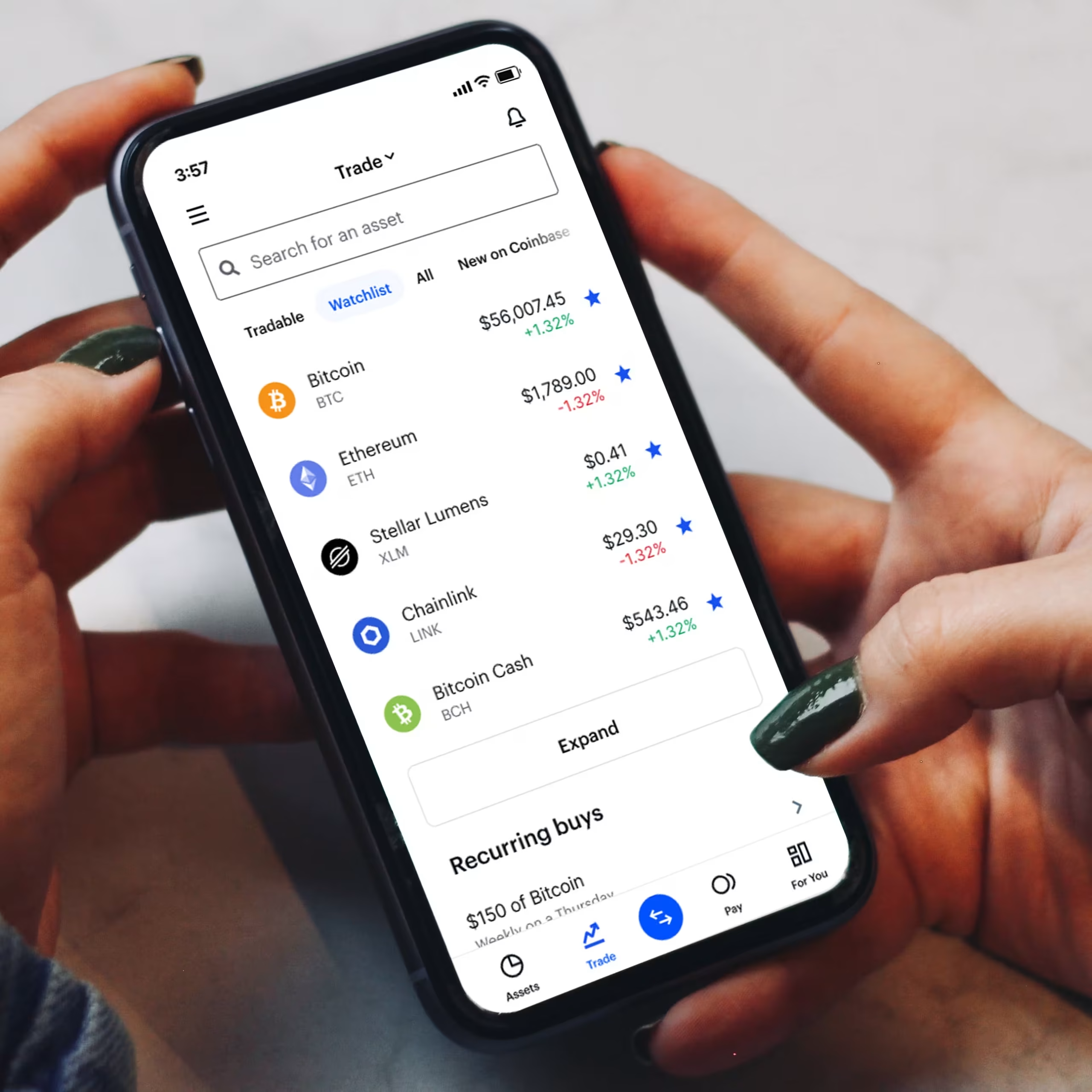
The default app is what most people mean when they say Coinbase. You pick a dollar amount, hit buy, and a price appears that already has a spread baked into it. It’s fast. It’s also not cheap.
Then there’s Advanced Trade, tucked inside that same account, which runs on a real order book instead of a hidden markup. You can place limit orders, watch depth charts, and see exactly what you’re paying in maker and taker fees. This replaced the old standalone Coinbase Pro app a while back.
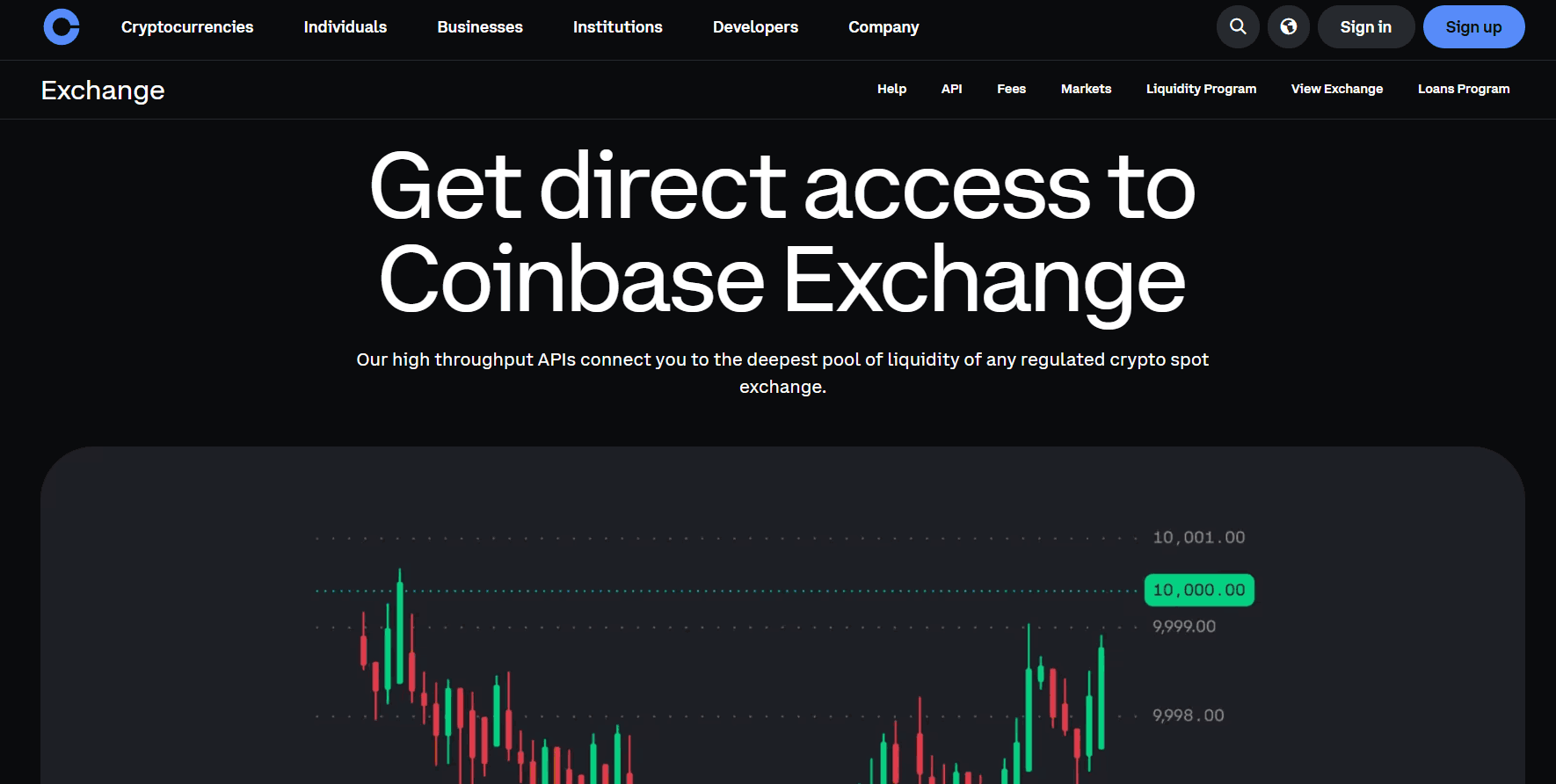
Separately, there’s Coinbase Exchange, an institutional order book built for high-frequency trading firms plugging in through direct APIs. Almost nobody reading a review like this needs to touch it.
And then Coinbase Prime exists for funds and larger investors who want custody, financing, and staking handled under one roof.
Knowing which of these you’re using isn’t a minor detail. It’s the difference between a reasonable fee and a fee that eats a real chunk of your purchase.
Coinbase Review Fees, Without the Vague Language
Most fee explanations online stick to percentage ranges that don’t mean much until you see them applied to actual money. So let’s do that.
The standard app folds a spread of roughly 0.50% into whatever price you’re quoted, on top of a separate transaction fee that shifts depending on your payment method and purchase size. You rarely see that spread called out on the screen. It’s just there.
Advanced Trade works differently. It charges based on your trailing 30-day volume, using a maker-taker structure. A maker order sits on the book waiting to be filled, adding liquidity, so it gets a lower fee. A taker order matches something already sitting there, pulling liquidity out, and pays more for the privilege.
Coinbase Advanced Trade fee tiers (verify current rates before trading, since these shift)
- Under $10,000 monthly volume: 0.40% maker / 0.60% taker
- $50,000+ monthly volume: roughly 0.25% maker / 0.40% taker
- High institutional volume: fees drop further, nearing 0.00% maker
- Stablecoin pairs like USDC/USD: 0.00% maker, a handful of basis points for taker
Put $500 into Bitcoin through the standard app and you’ll likely lose somewhere around $10 to $15 before the coins even hit your account, once the spread and fee are both counted. Run the same $500 through Advanced Trade at the entry tier and that drops closer to $2 or $3. Same company, same coin, very different outcome depending on which interface you happened to open.
Coinbase One is a paid membership that waives the separate trading fee on both interfaces and throws in perks like free wire transfers and priority support. What it doesn’t do is remove that roughly 0.50% spread baked into standard app pricing, so the “zero fees” pitch is a little narrower than it sounds. Whether the subscription pays for itself really comes down to how often you trade. Buy once a month, and you probably won’t break even. Trade weekly and the math starts working in your favour.
Withdrawal costs depend on the network you’re sending over, not on Coinbase itself. Moving Bitcoin during a busy stretch on the blockchain will cost more than sending a token on a cheaper chain, and that’s just how network fees work everywhere, not something unique to this platform.
What You Can Actually Do on Coinbase
The buy-and-sell reputation undersells how much this platform has grown into over the past few years.
Coinbase feature snapshot
- Buy, sell, and convert crypto through Simple Trade or Advanced Trade
- Stake supported proof-of-stake assets like Ethereum and Solana, with rewards paid automatically
- Earn yield on USDC balances
- Coinbase One membership for fee waivers and perks
- Coinbase Card and a credit card that pays Bitcoin rewards on purchases
- Commission-free stock trading, 24 hours a day on weekdays
- Prediction markets covering sports, politics, and crypto events
- Futures and perpetual-style derivatives for eligible US traders
- Coinbase Wallet and the Base App for self-custody and onchain activity
- Crypto-backed loans against your holdings
Staking is about as hands-off as crypto gets. You lock up a supported coin, Coinbase runs the validator infrastructure on your behalf, and rewards land automatically based on whatever the network is currently paying, minus a cut for Coinbase. Rates aren’t fixed, so treat any number you see as a snapshot rather than something guaranteed.
The stock trading and prediction markets features are newer additions, and they put Coinbase in more direct competition with apps like Robinhood than it used to be. It’s a sign the company wants to be the one account people use for everything, not just crypto.
Security, Regulation, and the 2025 Breach
Coinbase says it keeps the large majority of customer crypto offline in cold storage, backed by insurance covering a portion of digital assets, plus FDIC coverage on US dollar balances sitting in custodial accounts. You get two-factor authentication and passkey login as standard options.
That’s the pitch. It’s not the whole story, though, and no honest review can skip what happened in May 2025.
On May 11 of that year, Coinbase got an email from someone claiming to have pulled internal customer support data. The company reported it to the SEC as a material cybersecurity incident, which is a fairly serious classification. Here’s the part that surprises people: this wasn’t a hack of Coinbase’s core systems. It was bribery. A small group of overseas customer support contractors, working through a third-party vendor, took payments to hand over customer data, including names, contact information, partial Social Security numbers, masked bank details, and images of government IDs.
Coinbase later confirmed 69,461 users were affected, a number that came out through a filing with the Maine Attorney General’s office. Passwords, private keys, and seed phrases weren’t part of what leaked, and the company has maintained the exposed data wasn’t enough on its own to break into someone’s account. The real danger was more indirect. With names and phone numbers in hand, someone could call a victim, spoof Coinbase’s caller ID, and sound convincing enough to talk them into moving funds voluntarily.
CEO Brian Armstrong turned down a $20 million ransom demand and instead put up a matching $20 million bounty for tips leading to arrests. Coinbase estimated the total cost of remediation and reimbursements could land somewhere between $180 million and $400 million, and it committed to voluntarily paying back customers who were tricked into sending money because of the incident.
What this really tells you isn’t that Coinbase’s core infrastructure failed. It’s that customer support access, even through a vetted outside vendor, is a genuine weak point. If you ever get a call from someone claiming to be Coinbase support asking for a two-factor code or pushing you to move funds to a “safety wallet,” hang up. That’s not something the company actually does, no matter how legitimate the caller ID looks.
Custodial vs. Self-Custody: Don’t Mix These Up
There’s a distinction worth being clear on. Your regular Coinbase.com account is custodial, meaning Coinbase holds the private keys on your behalf, and your USD balance can qualify for FDIC protection the same way a bank deposit would.
Coinbase Wallet and the newer Base App are a different animal entirely. These are self-custody tools, so you hold your own keys, and Coinbase never has access to your funds. That’s more control, but it comes with a tradeoff: there’s no safety net if you lose your recovery phrase. Coinbase’s insurance or FDIC protections do not cover anything held in a self-custody wallet, since Coinbase never had custody of it to begin with.
Getting Verified and Where Coinbase Actually Works
Coinbase uses tiered identity verification. Basic verification, usually just an email, phone number, and a government ID, gets you standard buying and selling with modest limits. Climbing to higher tiers, which can mean proof of address or income documents, unlocks bigger limits and features like wire transfers.
The platform is available in more than 100 countries, but don’t assume every feature you see advertised applies to yours. Derivatives, futures, and the newer stock trading product are currently limited to eligible users in the US, so it’s worth checking availability before you get too far into the signup process.
Pros and Cons
Who This Platform Actually Suits
Coinbase makes the most sense for someone who’d rather pay a bit more for a regulated, easy-to-navigate platform than chase the absolute lowest fee available. If you’re buying crypto every once in a while, the standard app will feel comfortable even with its higher cost baked in. Trade more often, and moving over to Advanced Trade closes most of that gap without forcing you off the platform entirely.
It’s a weaker match if rock-bottom fees at low volume are your top priority, or if you’re chasing a long tail of smaller altcoins that tend to show up on other exchanges first. If you want to see how the numbers actually compare, our Kraken review and Bitstamp review cover two exchanges that approach pricing and asset selection quite differently.
FAQ
Is Coinbase safe to use?
It keeps most crypto in cold storage and carries insurance on custodial holdings, plus FDIC coverage on USD balances. The 2025 breach exposed personal data through bribed support contractors rather than a hack of core systems, and no funds or private keys were ever taken.
What are Coinbase’s fees, really?
The standard app bakes in a spread of roughly 0.50% on top of a separate fee. Advanced Trade starts around 0.40% maker and 0.60% taker at low volume, dropping as your 30-day trading activity increases.
Is Advanced Trade the same as Coinbase Exchange?
No. Advanced Trade is the retail order book built into your regular account. Coinbase Exchange is a separate institutional platform meant for high-frequency trading firms connecting via API.
Does Coinbase One get rid of all trading costs?
It removes the visible fee on both Simple Trade and Advanced Trade, but the roughly 0.50% spread on standard app pricing still applies underneath it.
What actually happened in the Coinbase data breach?
Bribed overseas support contractors leaked personal data belonging to 69,461 users in May 2025, including names, partial Social Security numbers, and masked bank details. Passwords and private keys weren’t exposed, and Coinbase agreed to reimburse anyone tricked into sending funds because of it.
Is Coinbase Wallet the same thing as my main account?
Not at all. Your Coinbase.com account is custodial, so the company holds the keys. Coinbase Wallet and the Base App are self-custody tools where you’re the only one holding the keys, and Coinbase can’t touch your funds even if it wanted to.
Can I actually trade stocks through Coinbase?
Yes. As of 2026, eligible US users can trade stocks commission-free around the clock on weekdays, through the company’s FINRA-member securities affiliate, Coinbase Capital Markets Corp.