

If you’ve landed on this Collaborator.pro review, you’re probably weighing whether to trust a marketplace with your link-building budget. Or maybe you’re a site owner wondering if listing your own website there is worth the hassle. Either way, the questions end up pretty much the same. Does the catalogue hold up? Is pricing actually fair? And does any of this work if what you’re promoting happens to be crypto?
Collaborator.pro connects advertisers with website and Telegram channel owners, mostly for guest posts, press releases, and sponsored placements. Picture it as a middleman handling the messy parts of outreach: finding a publisher, agreeing on terms, paying safely, so you’re not cold-emailing fifty blog owners yourself and hoping someone replies.
That’s the pitch. What actually matters is how the mechanics hold up once you start clicking around, and that’s the part this Collaborator.pro review is going to walk through.

What Collaborator.pro Actually Is
At its core, this is a two-sided marketplace. Advertisers sit on one side, businesses, SEO agencies, marketers, all looking to publish content on someone else’s website or Telegram channel. Publishers sit on the other, people who own a blog, a news site, or a channel and want to earn something from it.
The company’s been around since 2017, starting as a fairly simple link-building tool before growing into something closer to a full PR distribution platform. That shift matters. Guest posts and backlinks are still central to the whole thing, sure, but press releases, sponsored articles, and Telegram advertising have all become real parts of what’s on offer now too.
Quick Facts
- Type: Marketplace for guest posts, PR content, and Telegram ads
- Founded: 2017
- Catalog size: 44,000+ websites, 3,000+ Telegram channels
- Coverage: 150+ countries, 50+ languages
- Core users: Advertisers, publishers, SEO agencies, affiliates
How Buying a Placement Actually Works
Here’s what an order actually looks like step by step, rather than the usual vague “browse and buy” summary.
It starts with filtering the catalogue. Over 70 parameters exist for narrowing things down: category, country, price, traffic, domain rating, and a few more specific ones too, like whether a site accepts crypto content or gambling topics.
Find a site that fits, and you either buy the placement outright or message the publisher first to check specifics, say, whether they’ll take a link to a crypto exchange or a DeFi project. Plenty of sites list their content restrictions right on the listing page, so guessing isn’t really necessary.
From there, you submit your article, or ask the publisher to write one, and wait for approval. According to the platform’s own numbers, over 75% of deals are finalised within 48 hours, which aligns with what a few independent reviewers have noted about how quickly things tend to move.
Once it’s live, a link comes back so you can check the post, confirm it matches what was agreed, and close out the deal.
Collaborator.pro
Does Collaborator.pro Work for Crypto Projects?
Worth tackling this head-on, since it’s one of the more practical questions a crypto-focused advertiser actually has.
Crypto isn’t treated as an afterthought here. Scroll through the catalogue, and a dedicated “Cryptocurrencies” tag shows up on plenty of websites and Telegram channels, sitting right next to categories like Business and Finance or Marketing. Several publishers explicitly list crypto topics as accepted content, which isn’t something every guest-posting marketplace bothers sorting by.
Payments matter here too. USDT (TRC-20) is accepted right alongside cards, PayPal, wire transfer, and Payoneer. For a crypto business, paying in stablecoin instead of routing everything through a card processor that might flag crypto transactions is genuinely useful, not just a nice extra.
One independent review specifically pointed out that pricing on crypto-related placements ran noticeably cheaper than other link-building platforms. That tracks with what you’d expect from a marketplace where crypto content isn’t restricted or treated as high-risk by default, since publishers aren’t pricing in the same friction mainstream ad networks tend to apply to anything crypto-adjacent.
None of that guarantees every publisher in the catalogue will take a crypto pitch, though. Filtering by category and checking each listing’s stated restrictions is still the move before committing to anything.
The Telegram Ads Side
Most coverage of this platform sticks almost entirely to websites, but the Telegram catalogue really runs as its own separate product.
Instead of domain rating or organic traffic, Telegram listings show average reach per post, follower count, and audience engagement percentage. A channel sitting at 5,000 followers with a strong engagement rate can easily outperform a much bigger channel nobody actually reads.
Crypto and trading channels turn up often here too, alongside entertainment, business, and news categories. For a crypto project trying to reach people who already live on Telegram rather than reading blogs, this catalogue is arguably more useful than the website side.
Pricing tends to sit lower than website placements, sometimes just a few dollars per post for smaller channels, scaling up as reach and engagement climb.
What the Verification Badges Actually Mean
Plenty of listings carry small badges, and it’s worth knowing what those actually confirm rather than just trusting a checkmark at face value.
Verification Signals
- Google Analytics verified: Traffic numbers pulled straight from the site’s own GA account, not estimated
- Search Console verified: Confirms the site owner actually controls the domain
- Ahrefs integration: Domain Rating (DR), URL Rating (UR), and keyword data pulled directly from Ahrefs, viewable without leaving the platform
That Ahrefs integration counts as a genuine point of difference. Instead of trusting a screenshot or a third-party guess, you’re looking at data pulled from a tool most SEO people already check on their own anyway.
Sites without these badges aren’t automatically bad. Plenty of smaller or newer publishers simply haven’t gone through verification yet. Still, all else equal, a verified listing is the safer place to start.
Guarantees: What Happens If a Link Gets Removed
This is the part that actually protects your money, and it’s more specific than most marketplaces bother offering.
Every placement comes with a free 3-month guarantee against deletion and non-indexing. If the article gets pulled or Google never indexes it within that window, you’re covered.
Want more than that? A paid 1-year extended guarantee sits on top for anyone after long-term insurance on a link rather than a three-month safety net alone.
It’s not unlimited coverage forever, and reading the specific terms on each listing before buying still matters, since guarantee length can shift slightly by publisher. But having any structured guarantee at all puts this ahead of plenty of informal guest-post arrangements, where you’re basically hoping the site owner doesn’t quietly delete your post six months down the line.
Pricing and Payment
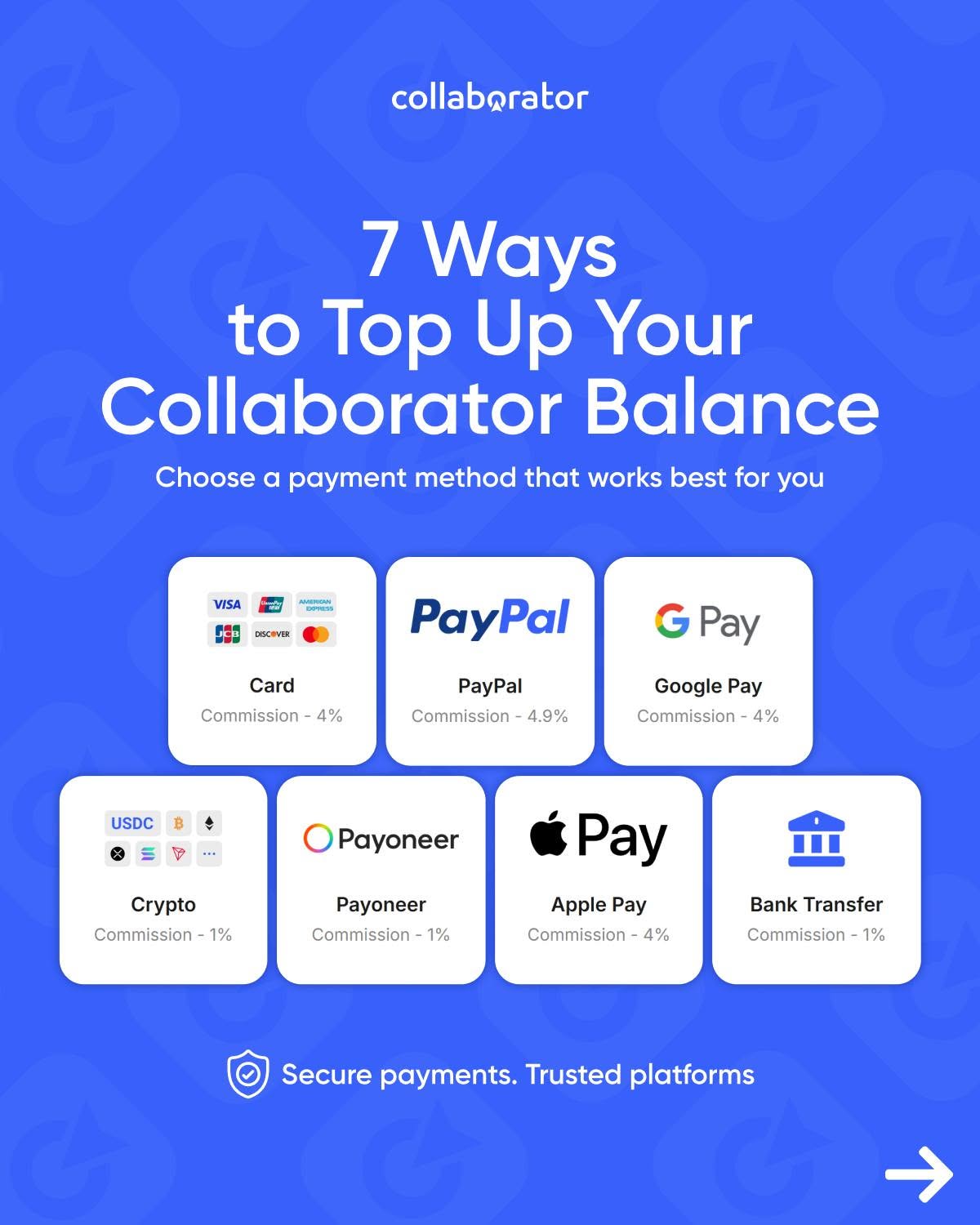
Payment Methods
- Credit/debit cards
- PayPal
- USDT (TRC-20)
- Wire transfer
- Payoneer
Pricing swings a lot depending on the site, anywhere from around $2 to $3 for a smaller Telegram post up to $90 or more for a placement on a higher-traffic website with strong domain metrics. No flat platform fee sits on top that you’d need to budget for separately. The price shown per listing is generally what you pay.
Publishers get paid through the same set of methods, and the platform takes a commission on completed deals rather than charging membership fees just to list a site.
Publisher Side: Making Money From Your Own Site
Own a website or Telegram channel? The process just runs in reverse. List your site in the catalogue, set your own pricing, and specify what kind of content you’ll accept: crypto, gambling, adult, general business, whatever actually fits your audience.
Advertisers then either buy directly off your listed terms or message you first to hash out specifics. Once a deal closes and the content goes live, payment follows.
There’s an affiliate program running alongside all of this too. Refer someone to the platform, and you earn a lifetime commission on their transactions, not just a one-time signup bonus that dries up after month one.
Where the Catalogue Is Strongest
Worth being upfront about this rather than glossing past it: Collaborator.pro’s deepest inventory sits in Eastern Europe and the CIS region. Ukraine, Russia, Poland, and neighbouring countries show up heavily throughout the catalogue.
That doesn’t make the platform useless outside that region, though. Tens of thousands of sites span 150+ countries, including solid US and UK inventory, right there in the catalogue examples themselves. But if a campaign specifically needs strong regional coverage in Eastern Europe, this is one of the more useful marketplaces built for exactly that. Need broad coverage elsewhere instead? Set expectations accordingly, rather than assuming identical depth everywhere.
Agency and Team Features
Agencies juggling multiple clients get a separate account structure built around that reality.
Team accounts allow a separate login for each employee, with different access levels depending on which projects or clients they’re actually working on. Client data stays walled off from other accounts on the same team, and a single agency owner keeps overall control and billing in one place.
For a small agency running five or six client campaigns at once, that beats manually tracking who has access to what across a shared login.
FAQ
Is Collaborator.pro legit?
It’s an established marketplace running since 2017, backed by verified traffic data, Ahrefs integration, and a structured guarantee system. Most user feedback describes a functional, transparent experience, though isolated complaints about account issues do exist.
Does Collaborator.pro accept crypto-related content?
Yes. Crypto sits as its own catalogue category, with many publishers explicitly accepting crypto and DeFi content, and USDT works as a payment method too.
How much does a guest post cost?
Prices vary widely by site, from a few dollars for smaller Telegram placements up to $90 or more for higher-traffic websites with strong domain metrics. No separate platform fee gets tacked onto the listed price.
What happens if my link gets removed?
A free 3-month guarantee covers deletion and non-indexing on every placement, and a paid 1-year extended guarantee is available for longer-term coverage.
Does it work well outside Eastern Europe?
The catalogue spans 150+ countries, but its deepest inventory sits in Ukraine, Russia, and nearby CIS markets. Campaigns targeting other regions still have options, just with less density than the Eastern European side.
How do publishers get paid?
Through the same methods advertisers use, cards, PayPal, USDT, wire transfer, and Payoneer, with the platform taking a commission on completed deals rather than charging a listing fee.
Bottom Line of Collaborator.pro review
This Collaborator.pro review comes down to a fairly clear picture. It’s a functional, verification-backed marketplace that treats crypto content as a normal part of the catalogue instead of something to work around. That alone sets it apart from plenty of mainstream link-building platforms that either restrict crypto outright or price it as high-risk from the start.
If your campaigns lean toward Eastern Europe or CIS markets, catalogue depth works strongly in your favour. Running a crypto or DeFi project and need publishers who’ll actually accept that kind of content, plus a way to pay in USDT without routing through a card processor? That’s a real, practical fit here, not a marginal one.
Where it falls short is agency-specific polish. No white-label reporting, and the usual reminder to read guarantee terms per listing rather than assuming they’re identical everywhere. Neither one’s a dealbreaker, but both are worth knowing before committing a budget to it.