
Kraken launched in 2011. Most crypto exchanges that existed back then are gone now, and the ones that aren’t have usually had at least one serious incident involving customer funds. Kraken hasn’t. That’s not a marketing line — it’s just a verifiable fact, and it’s the thing that comes up first in almost any honest Kraken review.
What’s harder to explain quickly is how much the platform has changed over the last two years. Kraken in 2026 is not purely a crypto exchange anymore. It offers futures, tokenized U.S. stocks, a payments app, crypto-backed loans, and a self-custody wallet. Whether that expansion is actually useful to you depends entirely on what you came here to do.
What Kraken Is Right Now
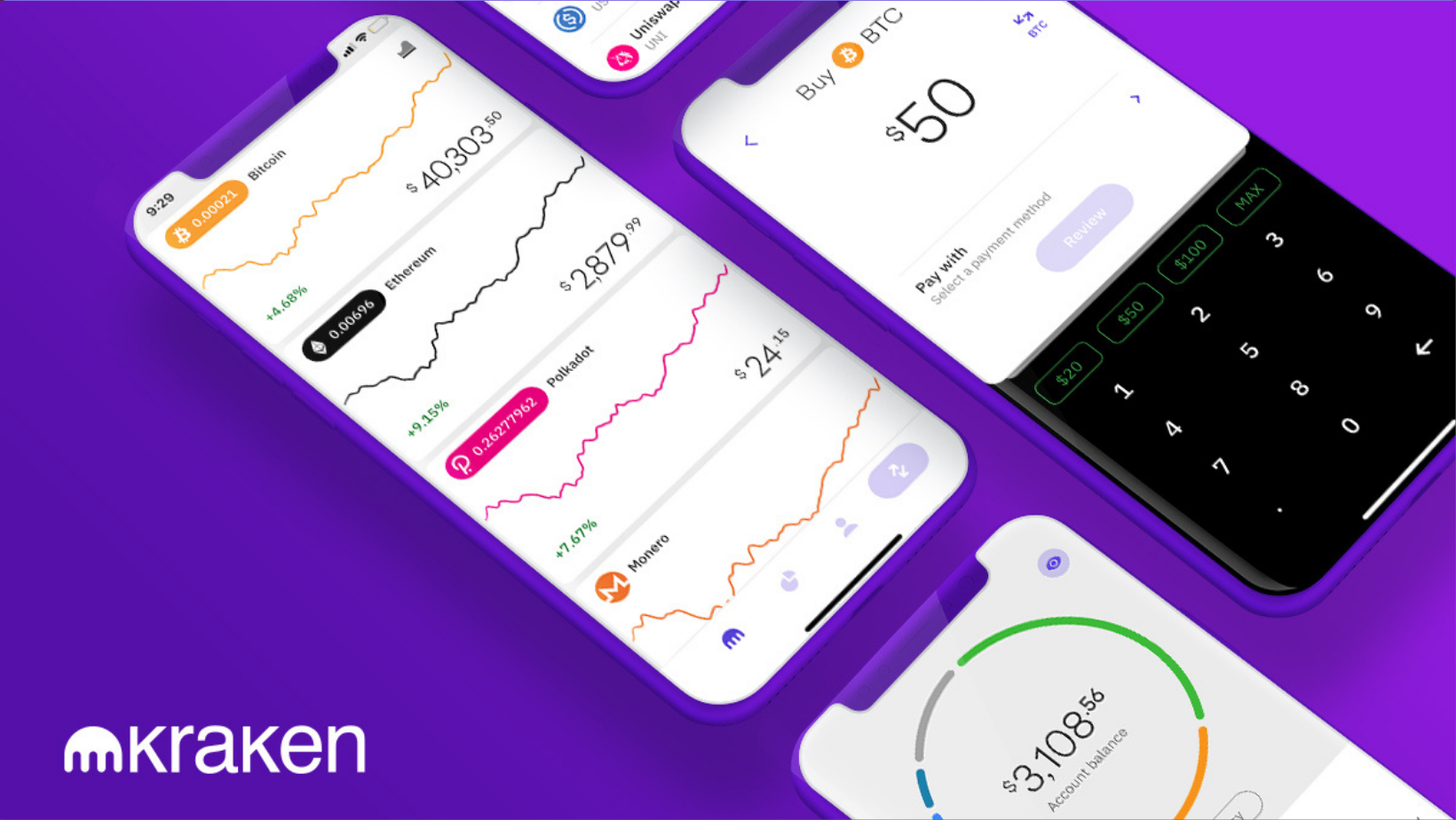
Kraken is run by Payward Inc., based in San Francisco. It’s licensed under MiCA through the Central Bank of Ireland, registered as a money services business in the U.S., and available in more than 190 countries. The platform currently lists over 500 cryptocurrencies across more than 1,200 trading pairs.
The acquisition spree over the past two years has been significant. In March 2025, Kraken bought NinjaTrader for $1.5 billion, which brought a retail futures platform and CFTC-regulated infrastructure under the same roof. Shortly after, it launched xStocks — tokenized U.S. equities for non-U.S. clients — which has since grown to 100 stocks and ETFs and crossed $25 billion in total transaction volume. A payments app called Krak followed, supporting transfers across more than 160 countries. So did Flexline, which lets users borrow against crypto holdings at fixed rates without touching DeFi protocols.
In November 2025, Payward filed a confidential draft registration statement with the SEC, targeting a public listing at a $20 billion valuation. Citadel Securities and Jane Street joined as pre-IPO backers.
None of that changes your trading fee directly. But if you’re deciding whether to trust a platform with real money over the next few years, knowing it’s preparing for a public listing with institutional scrutiny behind it is worth factoring in.
Not available in: New York or Maine. Margin and futures products are also restricted for retail clients in the UK and parts of the EU.
Supported Assets
| Category | Details |
|---|---|
| Cryptocurrencies | 500+ assets |
| Trading pairs | 1,200+ |
| U.S. stocks and ETFs | 11,000+ (select U.S. clients via NinjaTrader) |
| Tokenized equities (xStocks) | 100 U.S. stocks/ETFs (eligible non-U.S. clients) |
| Fiat currencies | USD, EUR, GBP, CAD, AUD, CHF |
| Stablecoins | USDC, USDT, and others |
Fees: What You’re Actually Paying
Most Kraken reviews quote the headline number and move on. The problem is there isn’t one headline number — there are several, and which one applies depends on where you’re clicking.
Standard app
This is what most new users see first. Buy something here and Kraken charges a flat 1% trading fee plus a spread, which typically runs around another 1%. So a $500 Bitcoin purchase through the standard interface, funded by a bank transfer, costs you roughly $10 in total. That’s 2% before you count any funding fees.
Pay with a debit card or Apple Pay and the cost goes up. Payment method matters more than most first-time users expect.
Kraken Pro
Same account. Different interface. Completely different pricing.
Pro uses a maker/taker model. At the entry tier, that’s 0.25% for a limit order (maker) and 0.40% for a market order (taker). That same $500 Bitcoin purchase as a limit order on Pro costs $1.25. Not $10. The gap is large enough that anyone making repeated buys should learn Pro before placing a second trade.
Fees keep dropping as your 30-day volume increases. At $50,000 in volume, taker fees fall to 0.20%. At $10 million and above, maker fees hit 0.00%.
Kraken+ membership
A subscription tier that brings trading fees to zero on the first $10,000 in monthly volume. Useful for moderate-frequency users who don’t want to think about fee tiers.
Withdrawal fees
These are asset-specific and easy to overlook. Bitcoin withdrawals have a minimum of around 0.005 BTC (roughly $430 at current prices) with a network fee of approximately 0.0002 BTC. At the minimum withdrawal size, that fee is manageable. Try to withdraw $50 worth of Bitcoin and the math falls apart — the same fixed fee becomes 34% of what you’re moving. Small balances and fixed withdrawal fees don’t mix well.
Fee summary:
- Standard buy (bank transfer): ~2% all-in
- Standard buy (card): higher than 2%
- Pro limit order, entry tier: 0.25%
- Pro taker order, entry tier: 0.40%
- Convert small balances: fixed 3%
- ACH deposit: free
- Wire deposit: fee applies
Two Interfaces, One Account
New users run into this often enough that it’s worth laying out clearly. Kraken has two separate apps — the main Kraken app and Kraken Pro — but they’re connected to the same account. No second signup. No fund transfers between them. You just switch.
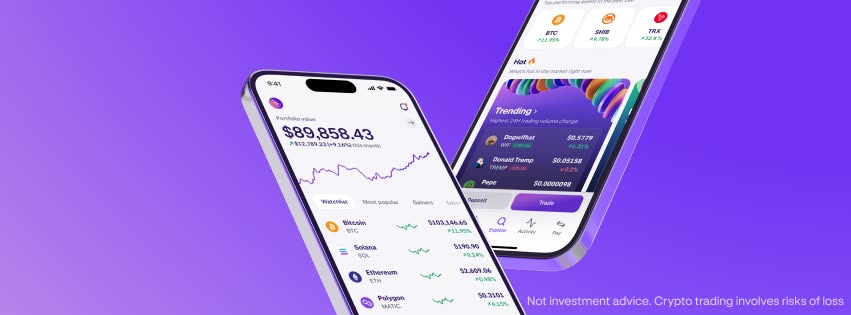
The standard app is built for speed and simplicity. Pick a coin, enter a dollar amount, tap confirm. It’s genuinely fine for someone making their first crypto purchase. The Pro interface is a different experience: configurable layout, order book, limit and stop-limit orders, trailing stops, depth charts, price alerts, and full access to margin and futures for eligible users.
Given how different the fee structures are, the only real reason to stay on the standard app long-term is convenience. The Pro app on iOS is rated 4.7/5. On Android, 4.2/5. The learning curve is real but not steep.
Security
The 15-year clean record gets mentioned in every Kraken review, and it should. But the specifics are more useful than the summary.
Kraken holds ISO 27001 certification and has completed SOC 2 Type 2 examinations. Cold storage covers the majority of client crypto. Account-level protections include FIDO2 security keys, passkeys, withdrawal allowlists, and a Global Settings Lock that freezes account changes for a set period even if someone gets into your login. These aren’t checkbox features — they’re the kind of controls that matter when something actually goes wrong.
Proof of Reserves is published quarterly through Merkle-tree attestations. Any user can download their account data and verify it against the published root hash without trusting Kraken’s word for it. The most recent attestation covers June 30, 2025.
The 2024 incident
A security researcher found a critical vulnerability in June 2024 and withdrew approximately $3 million in company funds before notifying the team. Kraken patched the flaw quickly and confirmed that client assets were not at risk at any point. The researcher’s approach drew criticism — exploiting a bug before disclosure is not standard responsible disclosure practice — but Kraken’s response was fast and transparent. What the incident revealed, practically speaking, is that when a serious flaw was found, it was company funds at risk, not customer balances.
Regulatory history
Two cases are worth knowing. In 2021, Kraken settled with the CFTC over offering leveraged trading to U.S. customers without proper registration. In 2023, the SEC took action over Kraken’s retail staking program in the U.S.; Kraken resolved the case and shut down that specific product for U.S. retail users. Neither case involved customer losses.
Staking
For eligible users outside the U.S. — and U.S. users should check their current eligibility carefully given the 2023 SEC settlement — Kraken offers two staking structures.
Flexible staking leaves your assets accessible. You can exit whenever you want. Ethereum runs around 1.1 to 1.35% APR. Polkadot sits around 3.4 to 5.8%. The rates are lower than bonded staking, but you’re not locked in.
Bonded staking locks assets for a period in exchange for better returns. Ethereum bonded is roughly 2.6 to 2.8% APR. Polkadot bonded can reach 10.8 to 11.8% depending on network conditions. Rewards on both structures are distributed weekly and added to your account automatically.
The Auto Earn feature takes care of idle balances without manual setup. If you’re holding assets you’re not actively trading, it’s a reasonable way to put them to work passively.
All APY figures are variable. Availability differs by country and by asset. Don’t assume any rate shown today will still apply next month.
Products Beyond Spot Trading
| Product | What It Does | Who It’s For |
|---|---|---|
| Margin trading | Up to 5x leverage on selected assets | Experienced traders; geo-restricted |
| Futures / perpetuals | Up to 50x leverage | Advanced traders; geo-restricted |
| OTC desk | Large-volume trades off the order book | Institutional and high-volume clients |
| xStocks | 100 tokenized U.S. stocks/ETFs | Eligible non-U.S. users |
| Krak payments | Send/receive across 160+ countries | Cross-border transfers |
| Kraken Wallet | Self-custody, DeFi, NFT access | Users who want to hold their own keys |
| Flexline | Borrow against crypto at fixed rates | Users who need liquidity without selling |
| API access | REST and WebSocket | Algorithmic and institutional traders |
Who It Actually Suits
Kraken rewards users who engage with it properly. The fee structure is built that way. Switch to Pro, understand the tiers, and the cost of trading here compares well against any major regulated exchange. Stay on the standard app and pay with a card, and you’ll find cheaper options.
The security record and regulatory posture also make a difference for a certain kind of user. If you’re putting a meaningful amount into an exchange and you want to know it’ll still be operating in five years, Kraken’s 15-year track record, upcoming IPO scrutiny, and transparent reserve reporting are all relevant. These things don’t show up in a fee comparison table, but they matter.
Beginners who are buying small amounts and holding are probably fine here, though the 2% standard app cost is worth acknowledging upfront. Users in New York or Maine don’t have the option regardless.
Pros and Cons
Verdict
Kraken is not the most beginner-friendly platform and it’s not the cheapest if you never leave the standard interface. But used correctly, it covers a lot of ground in a single account, with a security record and regulatory track that most of its competitors can’t match. That combination is genuinely uncommon, and it’s worth more than it looks on a feature checklist.
Frequently asked Questions
Is Kraken safe?
Kraken has not lost customer funds to a hack in 15 years of operation. It publishes quarterly Proof of Reserves that any user can independently verify, stores the majority of client crypto in cold wallets, and holds ISO 27001 certification. No exchange comes with a guarantee, but Kraken’s security record is one of the more credible ones available.
What’s the difference between Kraken and Kraken Pro?
Same account, two different interfaces. The standard Kraken app is designed for simple purchases and charges around 2% all-in. Pro uses a maker/taker fee model starting at 0.25% for limit orders, and adds advanced charting, multiple order types, and access to margin and futures. Anyone making regular trades should be using Pro.
How much does Kraken charge in fees?
It depends on which interface you use. Standard app purchases cost roughly 2% all-in, with card payments running higher. Kraken Pro starts at 0.25% maker and 0.40% taker at the entry tier, with fees decreasing at higher volume. ACH deposits are free; other funding methods carry their own fees.
Does Kraken offer staking?
For eligible non-U.S. users, yes. Kraken’s 2023 settlement with the SEC ended its retail staking product for U.S. customers. Outside the U.S., flexible and bonded staking is available on assets including ETH and DOT. Rates vary and are not guaranteed.
Can I trade stocks on Kraken?
Select U.S. users can access more than 11,000 stocks and ETFs through the NinjaTrader integration. Eligible non-U.S. users can trade xStocks, which are 100 tokenized U.S. equities that settle on-chain and trade around the clock. Geographic restrictions apply to both.