What Is OKX? A Quick Overview
OKX (formerly OKEx) is one of the world’s largest cryptocurrency exchanges by trading volume. Founded in 2017 by Star Xu and headquartered in the Seychelles, OKX today serves over 50 million users across more than 100 countries, offering everything from spot and derivatives trading to a full Web3 wallet, DeFi integrations, NFTs, and a native blockchain (X Layer).
This OKX review takes a critical, analytical approach — we won’t just list features. We’ll examine where the platform genuinely excels, where it falls short, and what recent regulatory events mean for your trust in the exchange. The bottom line: OKX is technically impressive, but in 2025, it carries more regulatory baggage than any honest review can ignore.
Quick context: OKX rebranded from OKEx in January 2022. The name change accompanied a broader strategic shift toward Web3 and a global expansion push — but also a period of significant regulatory turbulence.
Security & Regulation
Security is the most critical — and most complicated — area of any OKX review. On the technical side, the platform has built a genuinely robust infrastructure. On the regulatory side, 2025 delivered some of the most damaging headlines in the exchange’s history.
Technical Security Features
- Cold storage: Over 95% of user assets are held in geo-distributed offline wallets, limiting exposure to online attacks.
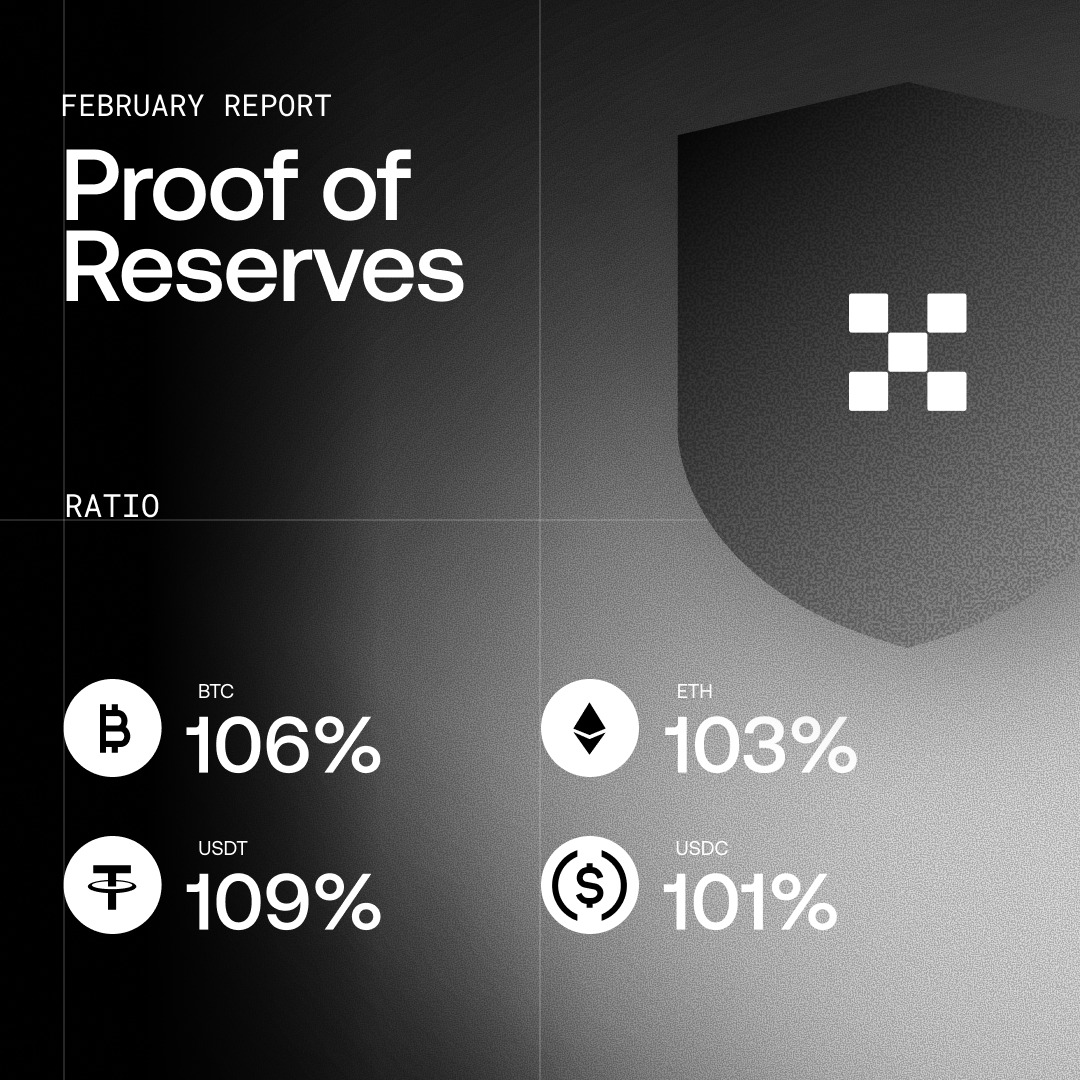
- Proof of Reserves (PoR): Monthly reports verified using Merkle tree and zk-STARK cryptography. February 2026 data showed BTC at 106%, ETH at 103%, USDT at 109%, and USDC 101% — all above the 100% backing threshold.
- Two-factor authentication (2FA): Via SMS, email, or Google Authenticator. Physical security keys (FIDO2 passkeys) are also supported.
- Anti-phishing codes and optional withdrawal address whitelisting add account-level protection layers.
- CertiK security rating: OKX holds an “AA” rating — the highest tier available.
- Insurance fund: A reserve exceeding $700 million protects users against platform-side exploits (separate from PoR).
The Regulatory Controversies — A Critical View
February 2025: OKX paid a $505 million settlement to U.S. authorities for Anti-Money Laundering (AML) violations — one of the largest penalties ever imposed on a crypto exchange.
March 2025: OKX suspended its DeFi aggregator service after European regulators alleged it was used to launder proceeds from the $1.5 billion Bybit hack. OKX denied the allegations, but the suspension followed nonetheless.
Additional concerns include the withdrawal of OKX’s VASP license in Hong Kong and a security incident in June 2024 that prompted a “Security 2.0” upgrade — implying the previous security framework had gaps serious enough to require a complete overhaul.
Our assessment: The technical infrastructure is solid, and the PoR transparency is commendable. But the regulatory incidents are not minor infractions — they reflect real compliance failures at scale. For traders weighing risk, this is not a footnote; it’s a core consideration.
OKX Fees Breakdown
OKX fees are among the most competitive in the industry for active traders. The platform uses a tiered maker/taker structure, with fee levels determined by 30-day trading volume and total asset holdings on the platform.
| Product | Maker Fee | Taker Fee | Notes |
|---|---|---|---|
| Spot Trading (Standard) | 0.08% | 0.10% | Users under $100K in assets |
| Spot Trading (OKB holders, 1,000+ OKB) | 0.06% | 0.06% | Lowest standard tier |
| Futures / Perpetuals | 0.02% | 0.05% | Highly competitive for derivatives |
| P2P Trading | 0% | 0% | No platform fee |
| Crypto Deposits | Free | Free | No OKX fee; blockchain fees apply |
| Fiat Deposits / Withdrawals | Variable | Variable | Depends on payment method and region — not always clearly stated upfront |
Transparency gap: Fiat on-ramp and withdrawal fees are among the less transparent aspects of OKX. They vary significantly by region and payment method, and are not always prominently displayed before you commit to a transaction.
Compared to Binance (0.10% base spot), Kraken (0.25% taker), and Coinbase (up to 0.60%), OKX’s fee structure is genuinely attractive — particularly for derivatives traders, where 0.02% maker is among the lowest in the market.
User Interface & Mobile App
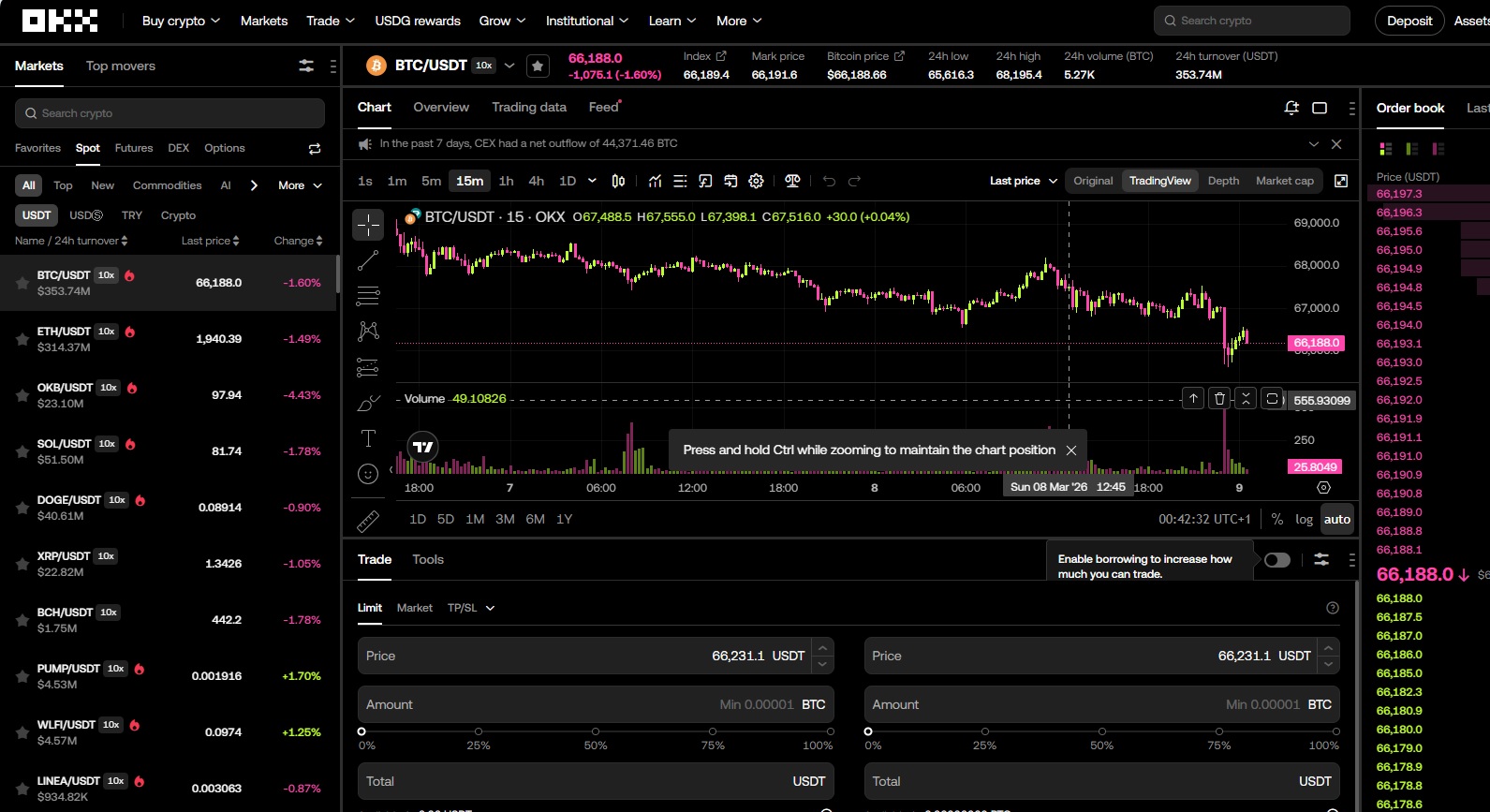
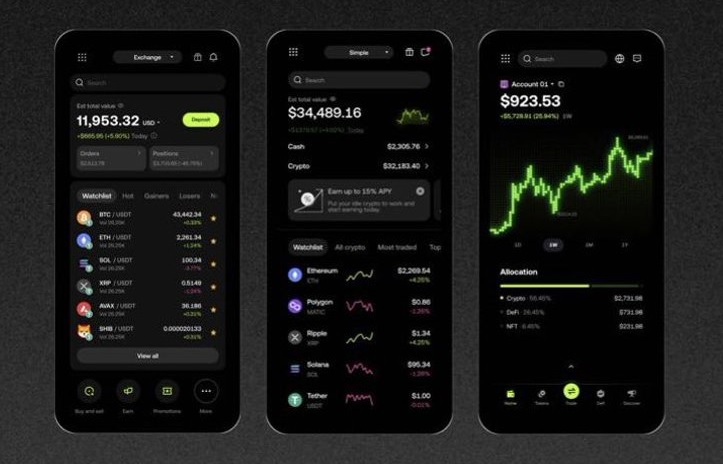
OKX has one of the most polished interfaces in the crypto space. The platform offers two distinct modes designed to serve different experience levels:
- Lite Mode: A simplified, clean interface for beginners that strips away advanced tooling and reduces the learning curve significantly.
- Advanced Mode: The full-featured trader dashboard with real-time charts, order books, trading bots, cross-margin controls, and derivatives access.
The mobile application (iOS and Android) maintains near-complete feature parity with the desktop version — a rarity among crypto platforms of this scale. KYC verification typically completes within 24 hours. The onboarding flow is relatively smooth, and the UI is well-regarded for its visual quality.
Where the Experience Falls Short
- Overwhelming for true beginners: Even in Lite Mode, the sheer breadth of products (spot, futures, earn, DeFi, NFTs, bots) can feel daunting for first-time crypto users.
- Customer support quality is inconsistent: Response times are frequently criticized, particularly for account verification disputes and withdrawal holds. There is no phone support, and email responses are reported as slow and sometimes scripted.
OKX Pay: A newer feature allowing fee-free USDC/USDT transfers over the X Layer network, with daily earning rewards. Adds genuine utility for users staying within the OKX ecosystem.
Supported Cryptocurrencies & Trading Products
Breadth of asset support is one of OKX’s clearest strengths. The exchange offers:
- 350+ cryptocurrencies across spot, margin, futures, and perpetual swap markets
- 70+ blockchain networks supported in the Web3 wallet
- Staking on 30+ chains and protocols
- NFT marketplace integrated natively within the platform
- DeFi access via OKX Wallet without leaving the app — including a DEX aggregator that routes across multiple liquidity sources
- Copy trading — follow and replicate strategies of verified experienced traders
- P2P marketplace with 100+ local fiat currencies and 900+ payment methods
- OKX Jumpstart — launchpad for new token projects
- Trading bots — grid, DCA, arbitrage, and signal-based automation
OKX occupies a strategic middle ground: broader than Kraken or Coinbase in asset selection, but more curated and accountable than ultra-permissive platforms like MEXC or KuCoin. This balance is particularly appealing to traders who want depth without sacrificing reliability on listed assets.
The integration of a non-custodial Web3 wallet, DEX aggregator, NFT marketplace, and centralized exchange within a single application is genuinely differentiated — few platforms execute this as seamlessly as OKX.
Regional Availability
Regional availability is the weakest area in this OKX review, and where the platform’s regulatory friction is most directly felt by end users.
Positive Developments
- MiCA License (January 2025): OKX was among the first exchanges to receive MiCA pre-authorization, enabling regulated operations across the entire European Economic Area (EEA). A meaningful step for EU-based users.
- Dubai VARA License: Licensed by the Virtual Assets Regulatory Authority for the MENA region, offering institutional and retail spot trading.
- Malta MFSA: Licensed for EU operations.
- US Market (April 2025): OKX officially launched services in 40+ US states — following, notably, the $505M AML settlement that cleared the regulatory path.
- Australia: Operates through OKX Australia Pty Ltd, registered with ASIC and holding an Australian Financial Services (AFS) license.
Restrictions & Limitations
- United States: Derivatives and margin trading remain unavailable to US residents even after market entry.
- Hong Kong: VASP license withdrawn; derivatives and margin trading restricted.
- Singapore: Margin and derivative products restricted.
- Canada: Significant access limitations remain in place.
- CARF Compliance: Under the Crypto-Asset Reporting Framework now active in 48 countries, users must provide a Tax Identification Number (TIN) for daily withdrawals exceeding 2 BTC.
The list of restricted and partially-supported countries changes frequently. Always verify current availability in your jurisdiction before depositing funds. OKX’s Terms of Service and regional pages are the authoritative sources.
OKX Pros & Cons
Our Verdict on OKX review
OKX delivers a technically exceptional trading platform. The fee structure is among the best in the market, the asset selection is deep, and the unified CEX-plus-Web3 experience is genuinely differentiated. In a vacuum, it would score significantly higher.
But crypto doesn’t exist in a vacuum. The $505 million AML settlement, the DeFi service suspension, and the pattern of regulatory friction across multiple jurisdictions are not coincidences — they reflect real structural compliance weaknesses. For traders, this is a risk factor that belongs in any honest cost-benefit calculation.
OKX is not a scam. It is not imminently unsafe. But it is an exchange with a regulatory history that demands due diligence before committing significant capital.
👍 OKX Is a Good Fit If You Are:
- An experienced trader outside the US/Canada
- Focused on derivatives with low fees
- Looking for deep Web3/DeFi integration
- An EU-based user benefiting from MiCA oversight
- Interested in copy trading or bots
👎 Consider Alternatives If You Are:
- A complete beginner needing guided support
- Prioritizing maximum regulatory safety
- Based in a restricted region (Canada, HK)
- A US user seeking derivatives access
- Sensitive to AML/compliance risk history
OKX Review — Frequently Asked Questions
Is OKX safe to use in 2026?
OKX is technically secure — over 95% of funds are held in cold storage, monthly Proof of Reserves reports confirm 100%+ asset backing, and the exchange holds a CertiK AA security rating. However, the February 2025 AML settlement ($505M) and the March 2025 DeFi suspension amid money-laundering allegations are serious compliance failures that every user should factor into their risk assessment. No major hack of user funds has been reported.
What are OKX’s trading fees?
Standard spot trading fees are 0.08% maker and 0.10% taker for users holding under $100,000 in assets. Futures fees are 0.02% maker and 0.05% taker — among the lowest on the market. P2P trading incurs no platform fee. OKB token holders receive further discounts, and higher VIP tiers unlock progressively lower rates. Fiat deposit and withdrawal fees are variable and not always clearly listed upfront.
Is OKX available in the United States?
Yes — as of April 2025, OKX officially operates in over 40 US states, following its $505 million AML settlement with US authorities. However, derivatives and margin trading remain unavailable to US residents. OKX’s US presence is more limited in scope compared to its global offering.
How many cryptocurrencies does OKX support?
OKX lists over 350 cryptocurrencies across 70+ blockchain networks. This includes spot, margin, futures, and perpetual swap pairs. The platform also offers staking, DeFi access, an NFT marketplace, and a DEX aggregator — all within a single interface.
Is OKX regulated in Europe?
Yes. OKX obtained MiCA (Markets in Crypto-Assets) pre-authorization in January 2025, making it one of the first major exchanges to receive this license. This allows OKX to offer regulated products and services across the entire European Economic Area (EEA). It is also licensed in Malta through the MFSA.
Does OKX have a proof of reserves?
Yes. OKX publishes monthly Proof of Reserves reports verified using Merkle tree data and zk-STARK cryptography. As of December 2024, BTC reserves stood at 105%, ETH at 102%, and USDT at 106% — all above the 100% threshold. Third-party audits by Hacken provide additional verification. Users can independently verify their balances on-chain.
Disclaimer: This OKX review is provided for informational purposes only and does not constitute financial advice. Cryptocurrency trading involves significant risk, including the potential loss of all invested capital. Always conduct your own research (DYOR) before using any exchange or investing in digital assets. Land of Crypto may receive affiliate compensation if you use links on this page — this does not influence our editorial rating methodology.



Hello, just wanted to say, I loved this article.
It was helpful. Keep on posting!
Feel free to visit my web-site …