
Most hardware wallets demand the same ritual before you can trust them with anything. Write down 12 or 24 random words, figure out where to store that paper safely, and try not to think too hard about what happens if a house fire, flood, or someone with sticky fingers beats you to it. Tangem skips all of that. No seed phrase required by default, no USB cable, no battery, no screen. A credit-card-shaped chip and your phone’s NFC antenna handle everything. This Tangem wallet review covers how that actually functions in practice, what the EAL6+ certification means beyond the marketing claim, the December 2024 incident that surfaced a real flaw in the app, and everything worth knowing about the Ring and Tangem Pay before spending money on any of it.
What Tangem Is and How It Works
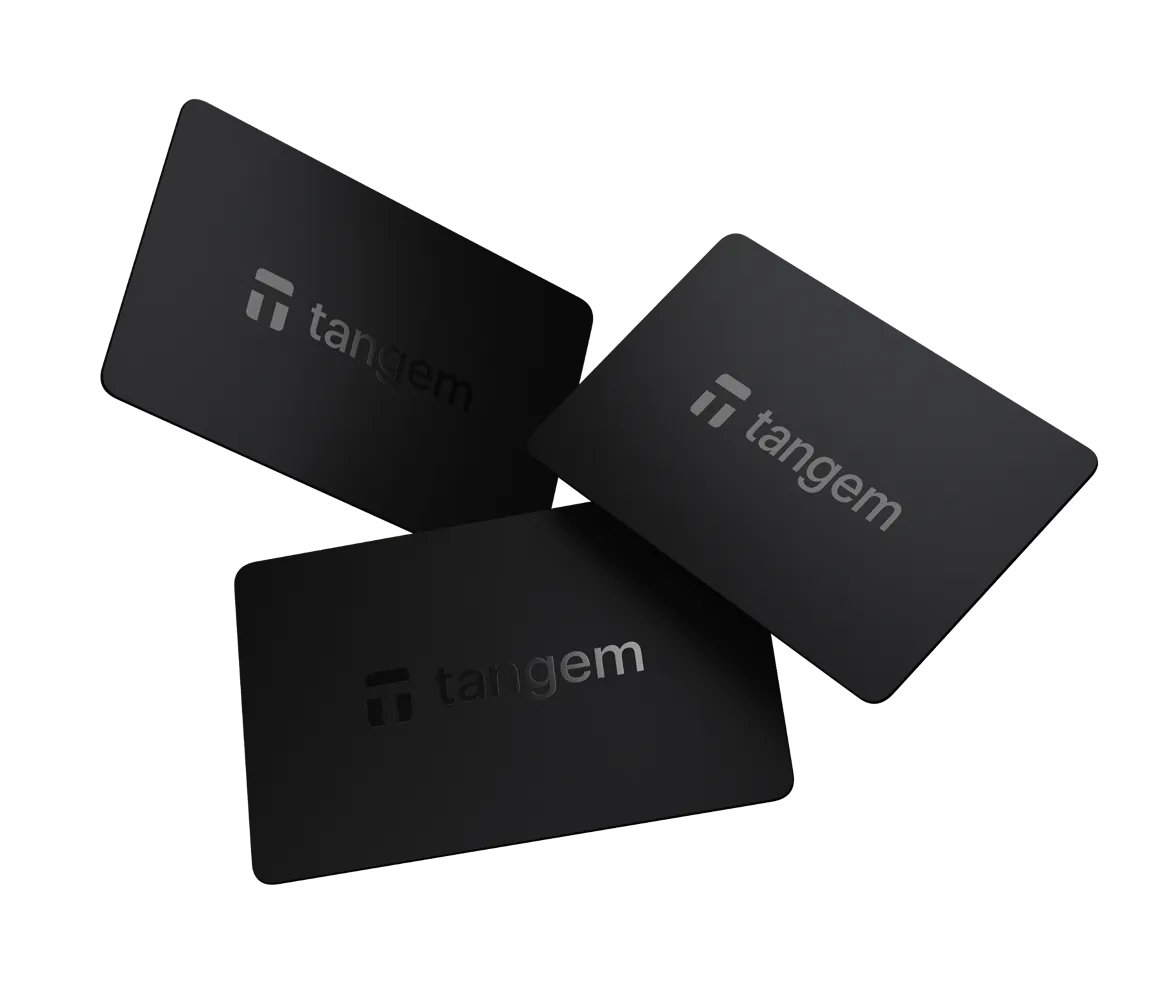
Founded in 2017, Tangem AG operates out of Zug, Switzerland. The card conforms to the ISO 7810 ID-1 standard, which is the exact spec for credit and debit cards. No ports, no buttons, nothing to charge.
Inside sits a Samsung S3D232A secure element chip. Tap the card against a phone’s NFC reader and the chip handles transaction signing internally, without transferring the private key across to the phone. Your phone runs the interface and shows the transaction details; the cryptographic work stays in the hardware. Communication runs on ISO 14443 Type A, the same protocol behind every contactless bank payment.
The private key is generated during first setup using a True Random Number Generator built into the chip itself. From that point forward, no copy of the key exists anywhere outside the card.
The Full Product Lineup
Tangem Wallet Pricing
Product Price Notes 2-Card Set $54.90 Lower recovery redundancy 3-Card Set $69.90 Recommended configuration Family Pack $139.80 Two 3-card wallets; free shipping Ring + 2 Cards $160.00 Ring + backup cards; free shipping Pro Kit $180.00 Full bundle; free shipping Prices as listed on tangem.com at time of writing.
Card Sets
During setup, the private key transfers from the first card to each additional card over an encrypted NFC link. Nothing readable passes through the phone at any point. Each card ends up as a fully independent, functional copy of the same wallet.
That redundancy is the whole argument for the 3-card set. One card goes missing: the other two still provide full access. A second one disappears: the remaining card still works. The 2-card set costs $15 less but shrinks the safety margin considerably. Misplace one of the two cards and also forget the access code, and there is no way back in unless a seed phrase was set up beforehand.
Tangem Ring
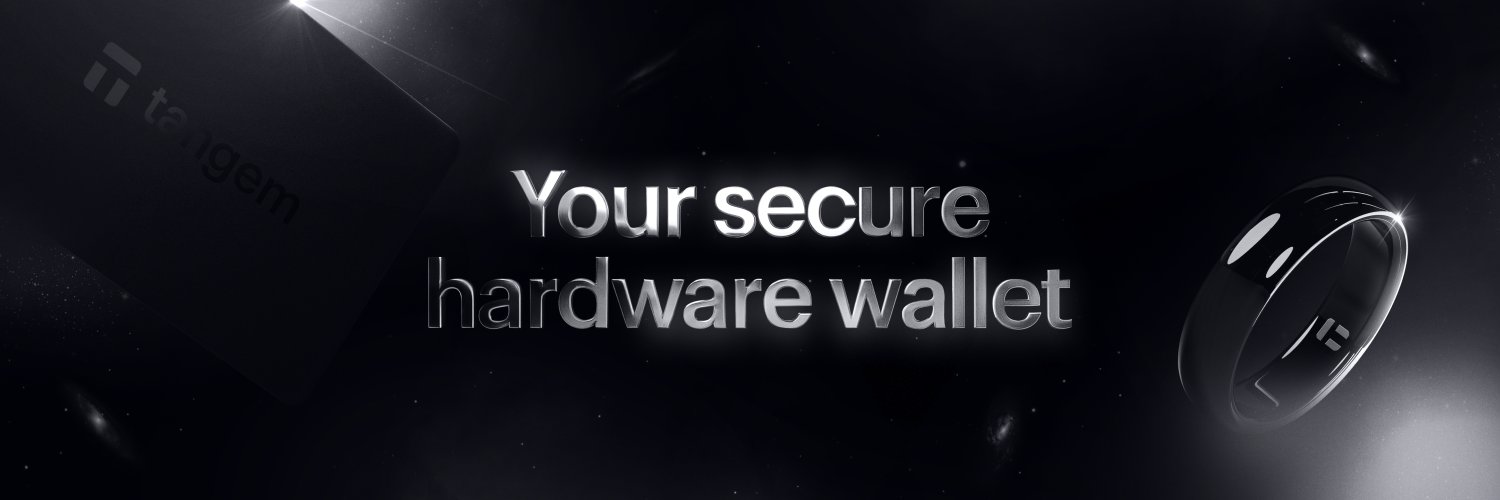
Same Samsung secure element as the card, same EAL6+ certification, same tap-to-phone interaction. The Ring just wraps it in a wearable form factor.
It ships in a bundle with two backup cards at $160. The intended split is the Ring for daily carry and the two cards stored safely at home. One practical note worth flagging: ring sizing is permanent, so picking the right size before ordering is less optional than it sounds.
Tangem Pay
A virtual Visa card, built directly into the Tangem app, running on USDC over Polygon. It supports Apple Pay and Google Pay.
Standard crypto debit cards require sending assets to a custodial exchange before spending; the exchange controls the balance and issues the card. Tangem Pay works differently. Funds stay on-chain, and when a purchase goes through, Tangem’s compliance partner Rain co-signs only the specific transaction, without access to the broader wallet balance at any point.
KYC for the payment account runs through Paera LLC, a US partner. That identity check is scoped only to the card account; the main Tangem Wallet itself stays fully private with no verification required. No monthly fee. Users pay Polygon gas and standard Visa FX charges on non-USD purchases.
As of mid-2026, Tangem Pay is live in the United States, parts of Latin America, and the Asia-Pacific region. A UK and EU launch is in the pipeline, with MiCA compliance cited as the condition for that rollout.
Security: What EAL6+ Actually Means
Common Criteria is the international framework for evaluating security hardware. Its Evaluation Assurance Levels run from EAL1 at the low end to EAL7 at the top. Biometric passports and high-security government SIM cards sit at EAL6+. So does Tangem’s chip.
Reaching that level involves real lab testing. Evaluators run invasive attacks that physically probe the chip’s silicon, alongside non-invasive approaches like power analysis, electromagnetic emissions monitoring, and fault injection attempts. A lab certifies EAL6+ only after the hardware resists all of it. That context matters when comparing against hardware wallets certified at lower assurance levels, and the difference between EAL4+ and EAL6+ is not trivial.
Kudelski Security and Riscure have separately audited the firmware. The Tangem app is open source, verifiable on GitHub, and Tangem states it can be rebuilt independently from source if needed. No Tangem server sits in the path between a user’s card and the blockchain.
Security Specs
- Secure element: Samsung S3D232A
- Certification: EAL6+ (Common Criteria)
- Firmware auditors: Kudelski Security, Riscure
- App: Open source (GitHub)
- Physical protection: IP69K waterproof, X-ray resistant, EMP and ESD resistant
- Operating range: -25°C to +50°C
- Warranty: 25-year limited hardware warranty
The December 2024 App Bug
On December 29, 2024, a researcher posted on Reddit about a bug in the Tangem app’s log processing. The specific failure: when a wallet was set up using a seed phrase and the user then contacted Tangem support through the app within seven days of activation, the logging mechanism was mistakenly including the private key in the file sent to the support team.
Tangem acknowledged the issue the following day and shipped patched versions, 5.19.1 on the App Store and 5.19.2 on Google Play. All affected support logs were permanently deleted. According to the official Tangem disclosure, fewer than 0.1% of users were potentially at risk, and no funds were lost.
The fix was fast. What drew criticism was the silence around it. Tangem posted nothing on Twitter, Discord, or Telegram for several days after the patch shipped. Users found out through Reddit. That communications gap drew pointed pushback from the community, and fairly so.
For context in any Tangem wallet review: the default seedless setup was completely unaffected, since no seed phrase exists in that configuration to expose. The bug required a very specific two-condition overlap: creating a seed-phrase wallet, then contacting in-app support within the same week. Whether the narrow scope makes this a minor footnote or a meaningful transparency signal is a judgment call worth making before buying.
The Backup Model: How Recovery Actually Works
Tangem’s multi-card backup is frequently misread as just a replacement for the seed phrase. The underlying mechanism is different.
When a second or third card is added during setup, the private key transfers between cards over an encrypted NFC link. The phone is involved in the process as an interface, but no plaintext version of the key passes through it. Each card ends up holding a complete, independent copy of the same wallet.
Lose all three cards with no seed phrase in place, and the wallet is gone permanently. No support call changes that. Self-custody means the key holder is the last line, and Tangem states this clearly rather than hiding it in small print.
Users who want a conventional recovery fallback can generate a seed phrase inside the Tangem app, or import an existing one from another wallet. That mode brings Tangem in line with how standard hardware wallets operate, including the familiar responsibility of keeping that phrase stored somewhere physically secure.
Supported Assets and App
Coverage
- Tokens: 14,100+
- Blockchains: 90+
- EVM chains: Ethereum, Polygon, BNB Chain, Arbitrum, Optimism, Base, Avalanche, Blast, Mantle
- Non-EVM: Bitcoin, Solana, Cardano, XRP, Tron, Litecoin, Cosmos, Sui
- NFTs: Ethereum, Solana, and others
- Full list: tangem.com/en/cryptocurrencies/
iOS and Android only. No desktop client, no browser extension, no USB connection. DeFi protocols are reachable through WalletConnect, which handles most major integrations, though complex contract interactions require more steps than a dedicated desktop setup would.
There is a limitation the app cannot work around: the card has no screen. When approving a transaction, the only address verification available is whatever the phone’s display shows. If clipboard-hijacking malware has silently swapped a copied wallet address for an attacker’s, the card signs whatever is presented to it, with no independent check from the hardware. Wallets like Keystone or Trezor Safe 5 display the destination address on their own screens for cross-referencing before signing. Tangem does not. For long-term holders who rarely move funds, this rarely comes up. For anyone making frequent high-value transfers, it is a genuine gap.
App ratings are 4.9 on the App Store and 4.8 on Google Play, as reported by Tangem. Core functions include buying, selling, swapping, staking through Yield Mode, NFT management, multi-account support, real-time price tracking, and push notifications. No personal data is collected, and no Tangem server is involved in processing transactions.
Fees
No subscription and no storage fee. Gas goes to the relevant blockchain.
Swap rates are set by whichever third-party provider the app queries at the time of a trade; they vary by pair and market conditions. Purchase fees depend on the in-app provider selected. Tangem Pay carries no monthly charge; the costs are Polygon gas and Visa FX on non-USD purchases.
Pros & Cons
Who It Works For
The picture that emerges from this Tangem wallet review is a product aimed squarely at one type of user: someone who wants real cold storage without the overhead of managing a recovery phrase. Long-term holders who move funds infrequently, beginners put off by the complexity of traditional hardware wallets, and frequent travelers who need something pocketable and always-ready are the strongest fit.
The Ring + 2 Cards bundle has its own audience. Use the Ring to pay for something during the day via Tangem Pay, go home to backup cards stored separately. It covers both daily spending and cold-storage redundancy in a single purchase.
Active DeFi users who depend on a desktop interface, anyone who wants address verification on an independent hardware screen, and developers who need fully open-source firmware will find better fits elsewhere.
FAQ
Is the Tangem wallet safe for long-term crypto storage?
The chip carries EAL6+ certification, the firmware has passed independent audits from two separate labs, and Tangem reports no confirmed hacks across more than six million cards since 2017. The practical risk is physical: misplacing all backup cards with no seed phrase configured.
What happens if I lose one Tangem card?
From a 3-card set, the other two continue working normally with no interruption. From a 2-card set, losing one card and forgetting the access code closes off all recovery unless a seed phrase was set up beforehand.
Does Tangem require a seed phrase?
No. The default setup generates and backs up the private key entirely within the chips, with no seed phrase created at any stage. Adding one is optional if conventional recovery is preferred.
Will the wallet still work if Tangem closes down?
Yes, because transactions run directly on the blockchain without any Tangem servers involved. The app is open source and can be rebuilt independently, and the card works on its own regardless.
What is the Tangem Ring?
A wearable hardware wallet using the same Samsung secure element as the card, with identical EAL6+ certification and tap-to-phone interaction. It ships bundled with two backup cards: the Ring handles daily use, the cards stay home as cold-storage backups.