
If you’ve ever moved crypto between wallets without an account or a selfie check, you know the routine. Paste an address, send the coins, wait. This dex.fo review skips past the marketing lines and walks through an actual test order instead, because that’s really the only way to find out whether “no KYC, no logs” means anything once real money is on the line.
LandOfCrypto review score
Dex.fo is built for people who already treat wallet-to-wallet swaps as something ordinary, not a first crypto purchase. So this review assumes you already know your way around gas fees, confirmations, and floating rates, and gets straight into what happened when we actually used it.
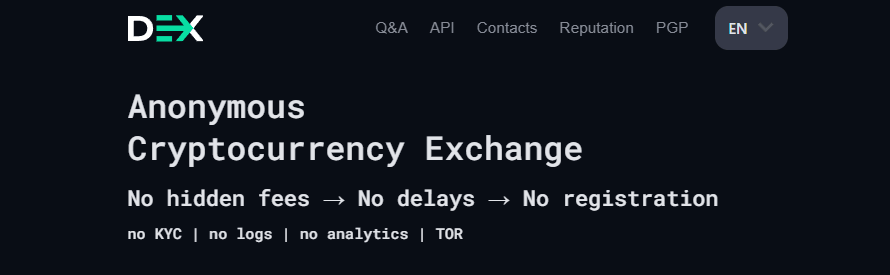
Quick Facts
| Coins supported | BTC, LTC, ETH, XMR, TRX, USDC (ERC20), USDT (ERC20 / TRC20) |
| Registration | None. No email, no account, ever |
| Rate type | Floating (Fast and Chain) |
| Advertised fee | ~0.8% + network fee |
| Exchange modes | Fast (own reserves) or Chain (third-party bridges) |
| Support | SimpleX chat, e-mail, forums (Bitcointalk) |
| Tor access | Yes, dedicated .onion mirror |
| Data retention | Exchange details deleted after 15 days |
What Dex.fo Actually Is
Dex.fo splits its swaps across two paths, and it’s worth understanding the difference before you click anything. Fast mode pays out straight from the platform’s own reserves, so once your deposit confirms, your coins move almost immediately. Chain mode instead pushes the swap through outside bridges and liquidity pools. Slower, sure, but it keeps orders going through even when Fast mode’s reserves can’t cover a particular pair.
If you want the full spec sheet alongside other no-KYC services, dex.fo also has a listing in our instant exchange directory, where you can filter it against the rest of the field.
There’s no dashboard here, no login, nothing tying past orders to an account you can check later. Every swap lives on its own page, and that page quietly disables itself after about an hour. You get one shot at it.
Fees: What We Actually Paid vs. What’s Advertised
Here’s where this review earns its place. Dex.fo’s homepage calculator quotes something close to 0.8% plus a network fee. We ran a $100 USDT to BTC swap to see how that held up in practice, and the number that came back didn’t quite match.
We sent 100 USDT on the ERC20 network. The quote showed a receive value equal to $98.37, and that’s before the separate $0.32 in Ethereum gas we paid just to get the deposit sent. Work that out, and you land around a 1.6% effective cost, close to double what the site advertises.
| Advertised | Observed ($100 test) | |
|---|---|---|
| Fee (orders under $500) | ~0.8% + network | ~1.6% |
| Fee (orders above $1,000) | ~0.8% + network | Not tested |
So we asked support about it directly. Turns out the 0.8% rate only applies once an order crosses $1,000. Anything smaller, our $100 test included, gets bumped to a higher effective fee, and nowhere on the calculator does it say so.
If you’re testing dex.fo the way most people do, with a small trial amount before trusting it with more, plan for something closer to 1.5-2%, not the number on the homepage.
Step-by-Step: Our Real Test Transaction
Here’s what the process actually looked like, from USDT on Ethereum through to BTC in our wallet.
We opened the swap widget, picked our pair, and dropped in a BTC address to receive at. There’s no email field on the form, not even as an optional field. A refund address gets offered too, but you can skip past it.
The order got generated for 90 USDT. We ended up sending 100 by “mistake”. Once that deposit cleared after 11 confirmations on Ethereum, the system just recalculated the payout on its own, based on the full amount received. No support ticket, no manual request, nothing we had to do.
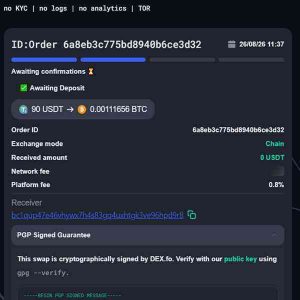
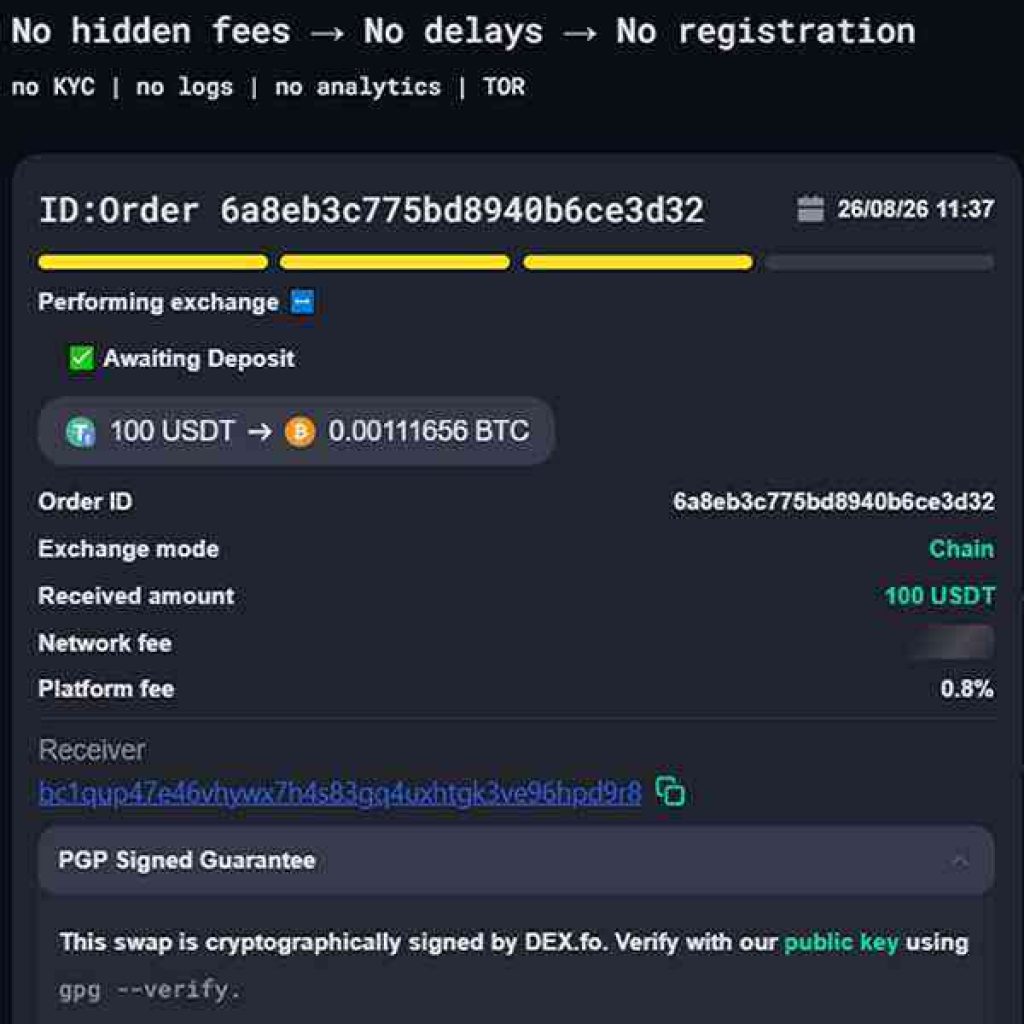
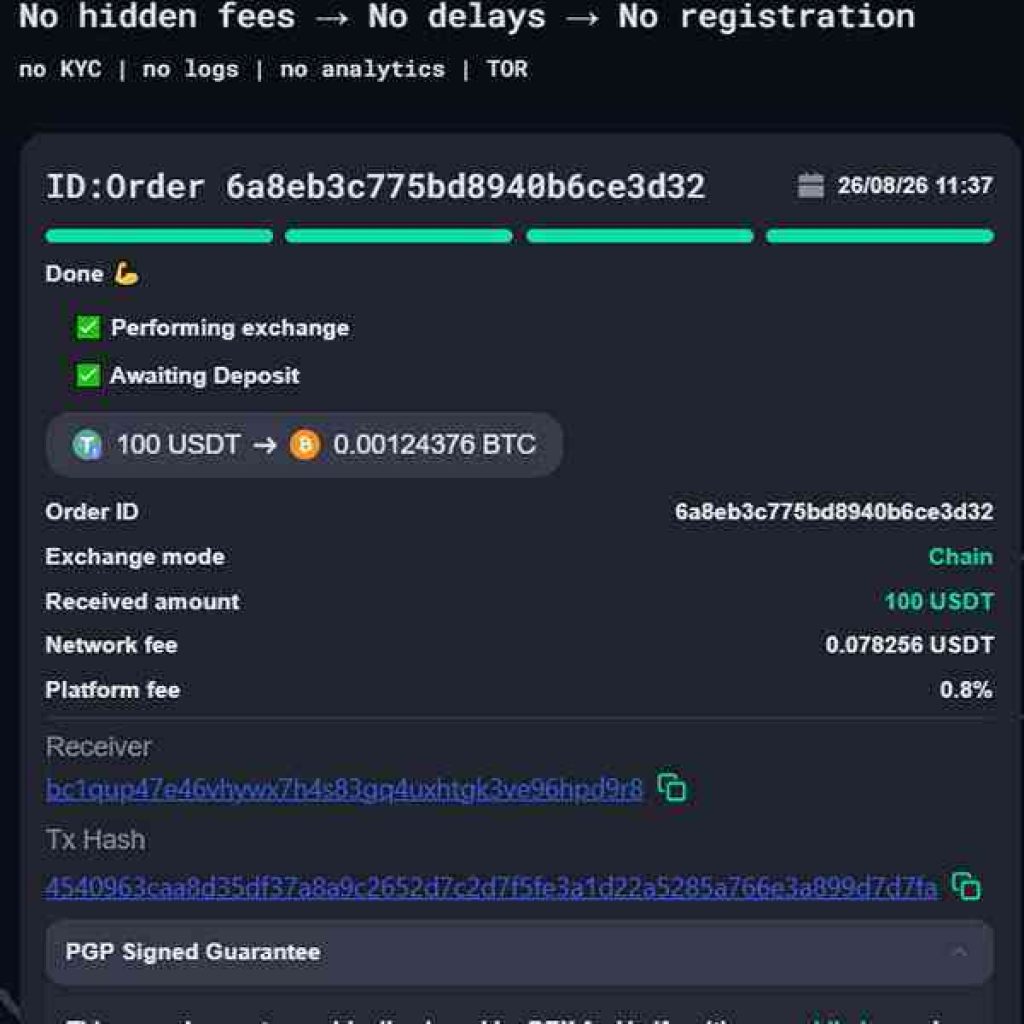
The quote had promised 0.00124376 BTC. What landed was 0.00125433 BTC, slightly more, because the rate floats and it happened to move in our favour between placing the order and getting paid. The BTC side went out at a 3.16 sat/vB fee, which belonged to the total ~1.6% fee in this transaction
From deposit detection to confirmed payout, it took about 33 minutes. Nearly all of that time was blockchain confirmations doing their thing, not anything dex.fo was holding up on its end.

Dex.fo
Privacy and Security Check
Dex.fo claims it doesn’t log IP addresses anywhere in its stack, not at the proxy layer, not in caching, nowhere. It also says sender, receiver, and refund address details get wiped after 15 days, and that the site skips cookies entirely.
We didn’t just take that on faith. Running a live network capture while placing our order turned up nothing, no analytics pings, no ad trackers, no calls heading off to some third-party domain. For a service whose whole pitch rests on not watching you, that’s the kind of claim worth actually testing rather than repeating.
Every completed order also comes with a PGP-signed Letter of Guarantee. It’s a signed receipt you can check yourself against the public key dex.fo publishes. That won’t save you from a bad trade, but it does mean you’ll have solid, independently verifiable proof of what the order actually said at the time.
Where Do the Coins Come From?
We ran a quick on-chain trace on the BTC we received. The address itself was brand new, never touched before our payout landed. Following the funding UTXO six transactions back turned up a fairly typical peel chain, a bigger balance splitting off smaller payments while the remainder rolls forward each time. No CoinJoin mixing anywhere in that history.
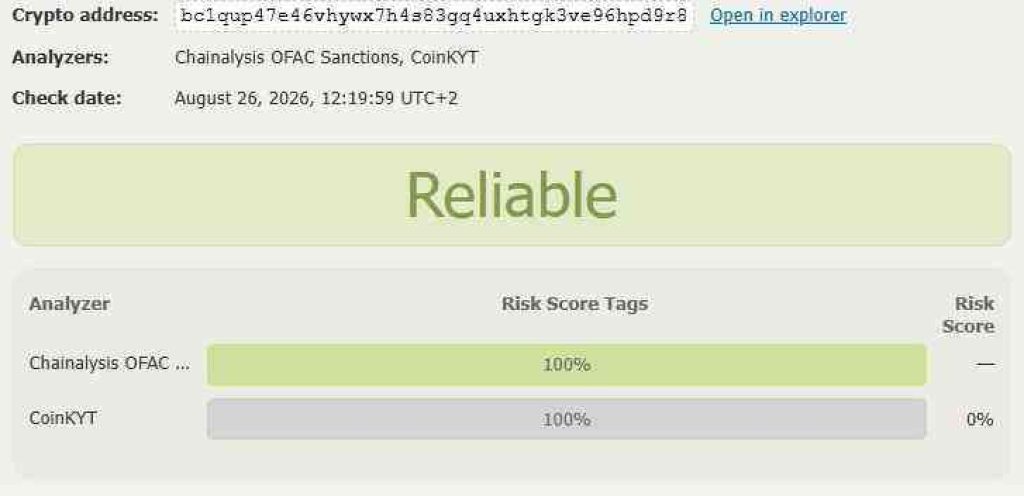
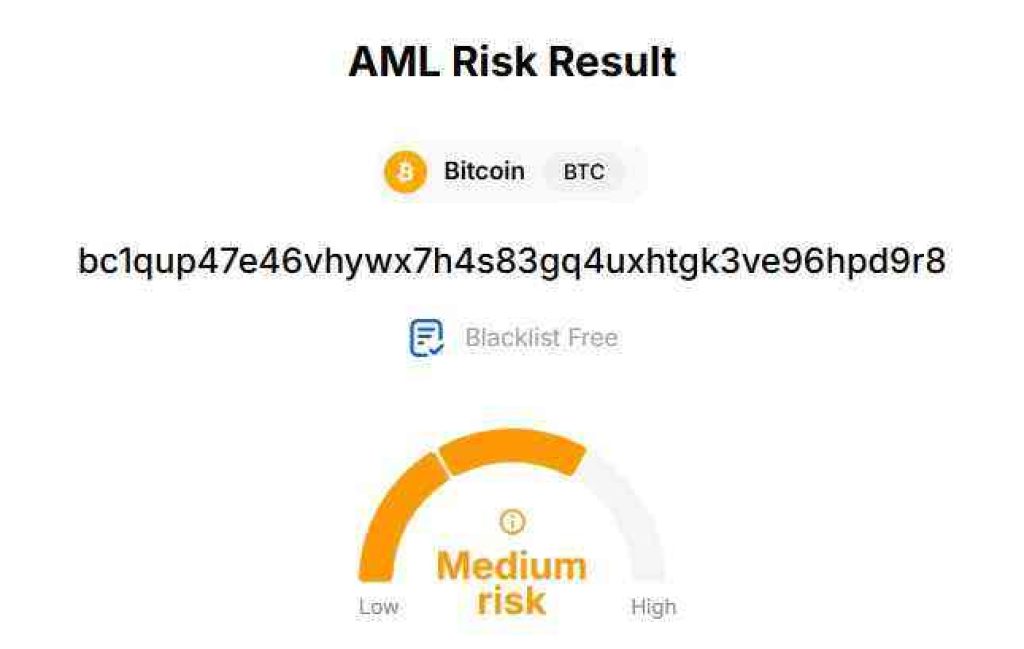
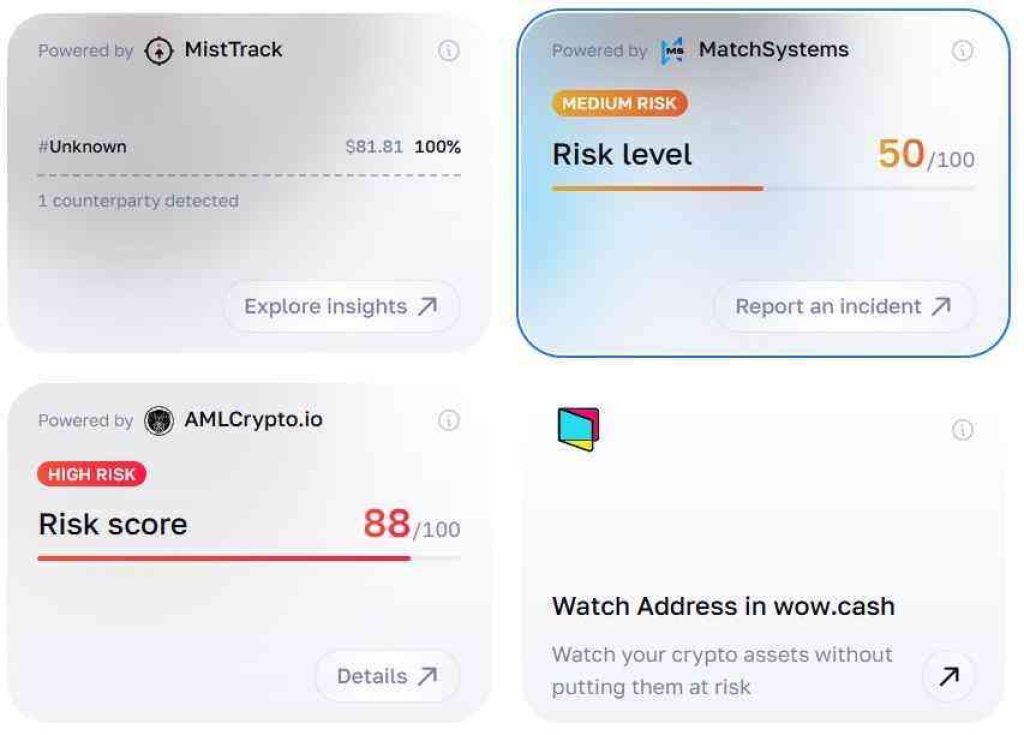
That trail eventually led to an address with over 85,000 transactions, and roughly 15,925 BTC received since January 2025. That kind of volume looks like the hot wallet of a larger exchange or payment processor, not an individual holder, though we couldn’t pin down who actually runs it from anything public.
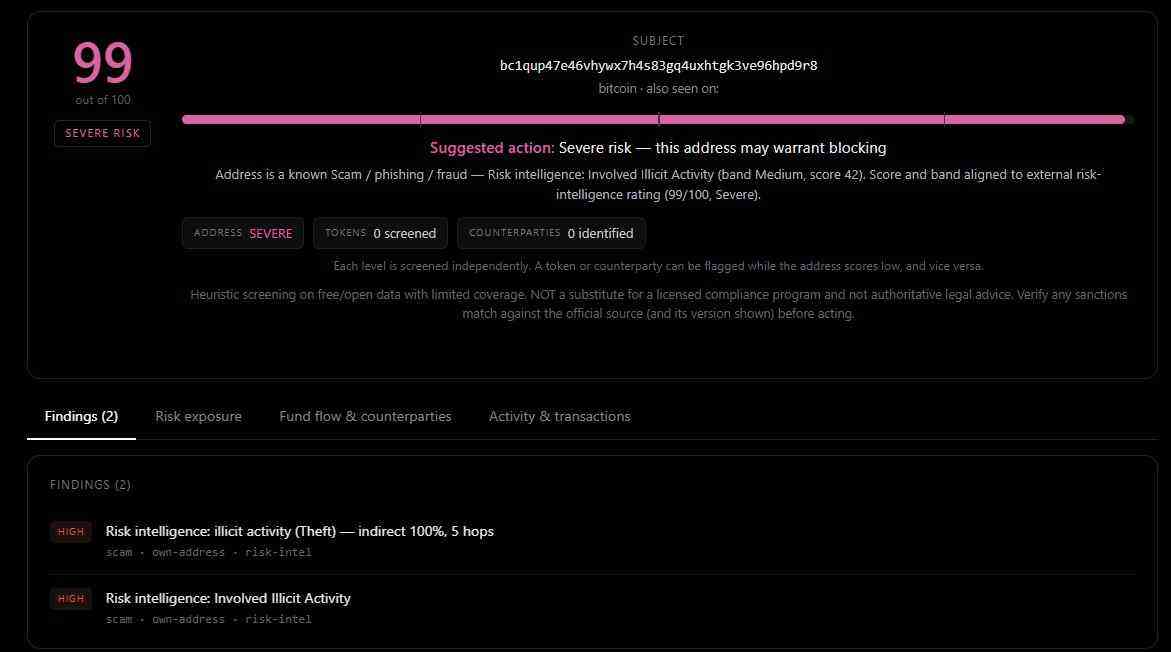
One thing worth flagging: different AML tools scored that same UTXO all over the place, from “reliable” to a flat 100% stolen-coin risk. That gap says more about how inconsistent these scoring tools are with each other than it does about the coins themselves. For what it’s worth, we later sent that same BTC to a major exchange without a hitch.
Speed: Fast Mode vs. Chain Mode
Dex.fo quotes 5 to 15 minutes for Fast mode and 30 to 60 for Chain mode. Our test ran through the version where timing depends entirely on how fast the network confirms, and it landed at 33 minutes total, a bit past Fast mode’s window but comfortably inside Chain mode’s range.
That tracks with what dex.fo says up front, that transaction time mostly comes down to the blockchain itself, not something they can really speed up on their end. A $100 order under normal conditions isn’t much of a stress test either, so a bigger amount or a congested mempool could easily push either mode past what’s advertised.
Customer Support Experience
Support runs through SimpleX, a messaging app most people outside privacy-focused corners of crypto have probably never installed. That alone is a bit of friction if you’re new to it.
Once we got it set up, though, the response came back in under a minute, and it was an actual person answering, not a script. That’s also how we ended up learning about the real fee structure in the first place, since it came straight from a support rep instead of a help page.
They have an active contact email address and are quite active and responsible on forums like Bitcointalk and altcoinstalks.
Reputation and Verifiable Trust Signals
Dex.fo backs itself with a 1 BTC escrow deposit posted on an Exploit.in forum, which is a concrete commitment you can actually go check rather than take their word for. They also keep active threads running across several Bitcointalk regional boards, bits. media, AltcoinsTalks, and a handful of no-KYC directory listings, and it reads more like ongoing upkeep than a single announcement post that got abandoned.
None of that promises good behaviour forever. But it does mean there’s something publicly at stake right now, which is more than most brand-new swap services bother putting up.
Pros and Cons
Is Dex.fo Legit?
Based on what we saw, dex.fo delivers on its core promise. No account, no email, and a swap that completes on its own even after we sent the wrong amount. The privacy claims held up too, and not just on paper, since the technical check backed up what the policy page says.
Where the marketing runs a little ahead of reality is fees for smaller users. If you’re swapping four figures or more, the advertised rate holds. If you’re testing it small first, the way most people reasonably would, expect to pay more than what the homepage shows.
FAQ
What’s the real difference between Fast and Chain mode?
Fast mode pays out straight from dex.fo’s own reserves once your deposit confirms, which tends to be quicker when there’s enough reserve depth for that pair. Chain mode routes through outside bridges and liquidity pools instead, adding time but keeping orders moving when reserves alone can’t cover it.
Do I need to hand over any documents or personal details?
No. There’s no email field, no account setup, and no identity check anywhere in the flow we went through.
Is the no-tracking claim actually true, or just something they say?
A live network check during our order didn’t turn up any third-party trackers or analytics calls firing, which lines up with what they claim rather than contradicting it.
How much does a swap really cost?
Plan for something around 1.5-2% (including network fee) on smaller orders. The advertised 0.8% plus network fee only kicks in once you’re swapping above $1,000.
What happens if I accidentally send the wrong amount?
In our case, sending more than the order called for triggered an automatic recalculation the moment the deposit was confirmed. No ticket, no manual request needed.
Is the onion address the same as the actual exchange?
Yes. The Tor mirror and the clearnet site both run on the same backend, just different front doors.
Final Verdict of Dex.fo review
Dex.fo holds up on the parts that are hardest to fake: no registration anywhere, verified absence of tracking, and support that answers fast with a real person behind it. The gap between what’s advertised and what smaller orders actually pay is the main thing worth going in prepared for. Not a dealbreaker, just something to budget around before you send funds.